As infrastructure around the Forty Acres becomes more complex and congested, Texas Engineers are analyzing how we get people from Point A to Point B.
By Benton Graham
About seven years ago, my wife and I took a cross-country road trip. We traveled almost 7,000 miles and passed through four of the country’s largest cities by population.
We left New York before sunrise to avoid the city’s notorious traffic, spent hours crawling through a thicket of cars between Hollywood and Santa Monica, and reached our final destination, Austin, where we quickly learned to avoid I-35 at all costs. Traffic was a constant presence on the road trip.
In each city, I’d ask locals what they thought about the congestion. Typically, the response would be about how much worse it had gotten. When we got to San Diego, I posed the question to our host.
“It’s not too bad,” she replied.
My jaw dropped. Who was this unicorn of a human being, and what would it take for people in other cities to speak similarly about their traffic?
It’s no surprise that most people are unhappy about their daily commute. Researchers in the UT Cockrell School of Engineering are working on it. (And, for the record, INRIX ranks traffic in San Diego as 28th worst in the country—better than the four largest urban areas in Texas.) They’re digging into the root causes of traffic and the technology behind the next generation of travel technology.
What causes gridlock?
Transportation expert Chandra Bhat says there are four main causes of traffic in Texas: population growth, more spread out cities compared to their European counterparts, few areas with residences, offices, and entertainment centers in close proximity, and the modern-day family structure—two parents working has led many to add errands, like grocery shopping, onto their commute home.
These factors have made it difficult for public transportation to gain traction and have made long, single-vehicle commutes the most common option for most Americans.
“When you have compact geographies, public transportation works well, primarily because with one stop, public transportation can get a whole lot of riders,” says Bhat, a professor in the Cockrell School of Engineering’s Fariborz Maseeh Department of Civil, Architectural and Environmental Engineering. He adds that when drivers tack on more stops to their commutes, it makes public transportation less appealing.
Indeed, Bhat and a team of researchers collected data via the Transportation Heartbeat of America Survey, funded by the U.S. Department of Transportation, which found that more than 90% of American households own a car and that 42% of Americans find public transportation difficult or impossible to use.
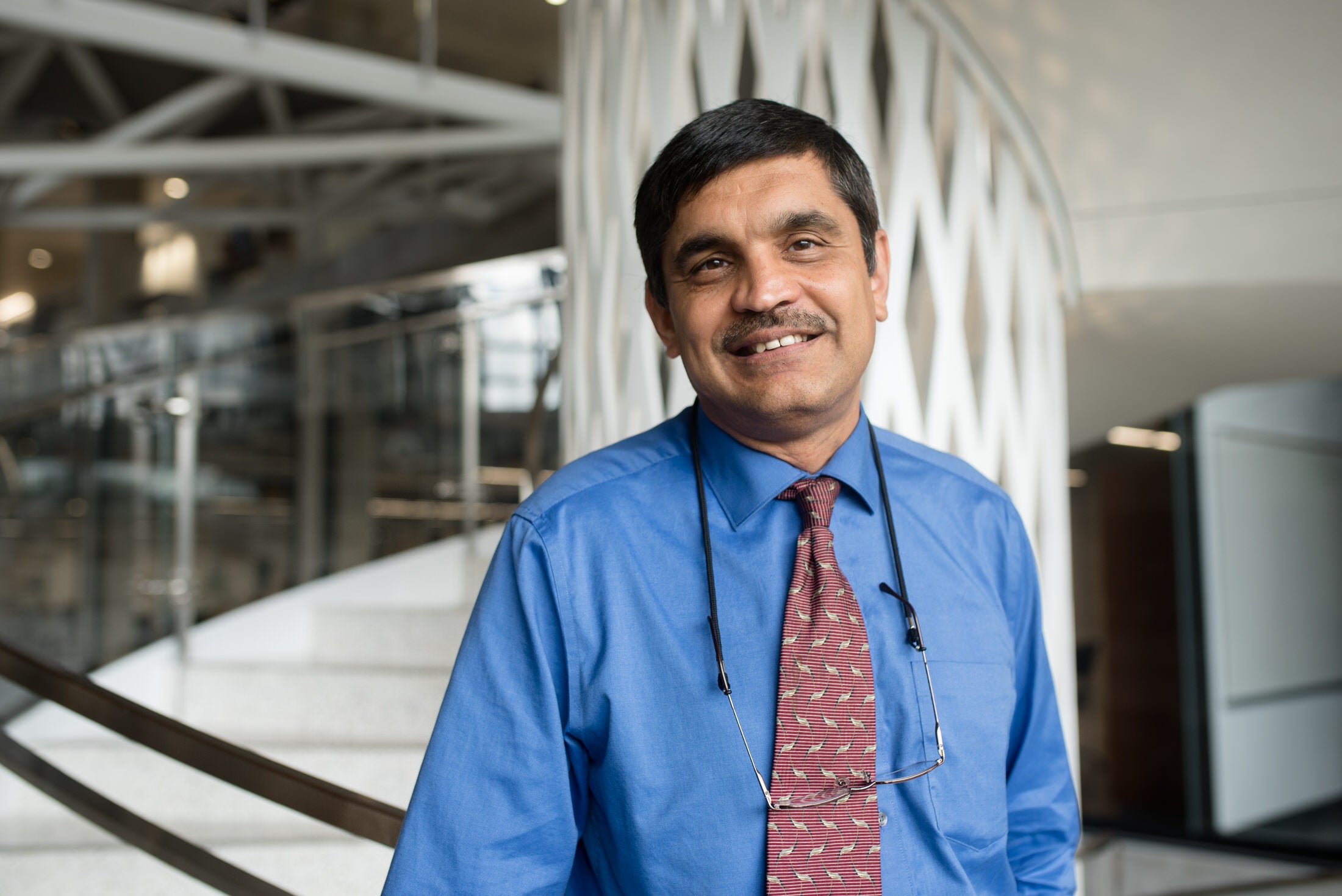
Texas Engineer Chandra Bhat.
4 main causes of traffic in texas:

Population growth

Sprawling cities
Lack of mixed-use areas

Modern family structure
UT Austin and Arizona State University researchers are now using the results for researcher papers on vehicle choice, how to fairly charge for road use, and how transportation impacts daily lives. One study’s abstract notes, “People with limited access to a household vehicle, lower incomes, less education, younger adults, unemployed individuals and those living in larger households with children were all more likely to report transportation difficulties.”
None of the four causes listed by Bhat directly relates to transportation, which highlights the interconnectedness of our time stuck in traffic with larger societal forces. Traffic solutions once entailed building new roads, but rising building costs and increasingly limited space complicate the problem and illuminate the need for new solutions.
In Europe, grocery stores are located close to public transportation stops, making it easier to add a stop to pick up an onion or a lemon on the way home without going too far out of the way.
It will also require new approaches to land-use policy. Building denser cities that are conducive to bicycling and walking—a concept Bhat refers to as travel demand management—will help and, if done correctly, can make public transportation more attractive. There are also ways to make existing roadways more efficient, such as improving the timing of traffic signals or implementing better systems for clearing incidents from the road more quickly.
Autonomous vehicles, the solution?
The proliferation of autonomous vehicles represents one of the most significant developments in transportation in decades. In Austin alone, Uber riders can opt into rides with Waymo AVs, and Tesla is looking to quickly grow its Robotaxi offering. Even local public transit provider CapMetro has been testing automated buses.
But will AVs cure our traffic woes? Experts aren’t so sure. For one thing, this trend could increase the size of the vehicles we drive, taking up more road space.
“If I’m going to spend so much time in my self-driving car and I’m not driving, why would I want to have this cocoon of a car that I have now? A sedan,” Bhat says. “Maybe we’ll all start moving toward autonomous recreational vehicles, because I’m spending so much time there. I’m not driving. I want to have a table. I want to be able to work.”
Self-driving cars might also make people more willing to live farther away from work because they don’t actually have to drive, a double-edged sword that could increase congestion but also make a long commute more tolerable. Plus, half of the respondents to Bhat’s Transportation Heartbeat Survey said they wouldn’t be willing to ride in a self-driving car.
Bhat is skeptical of claims in earlier studies regarding the traffic congestion, emissions and air quality benefits of AVs, as many of these studies rely on prior assumptions about how people will use the time they’re not driving. There is no single “silver bullet” solution to cure our traffic woes, Bhat said.
Todd Humphreys, professor in the Department of Aerospace Engineering and Engineering Mechanics, and his Radionavigation Laboratory team have made important strides in AV safety. They developed a way for ground vehicles like Waymos to know their position fairly reliably to about 15 centimeters, even in busy and unpredictable urban areas like downtown Austin. Google Street View licensed an evaluation version of the code.
“Nobody else has shown this level of performance ever before.”
— Todd Humphreys, professor, Department of Aerospace Engineering and Engineering Mechanics
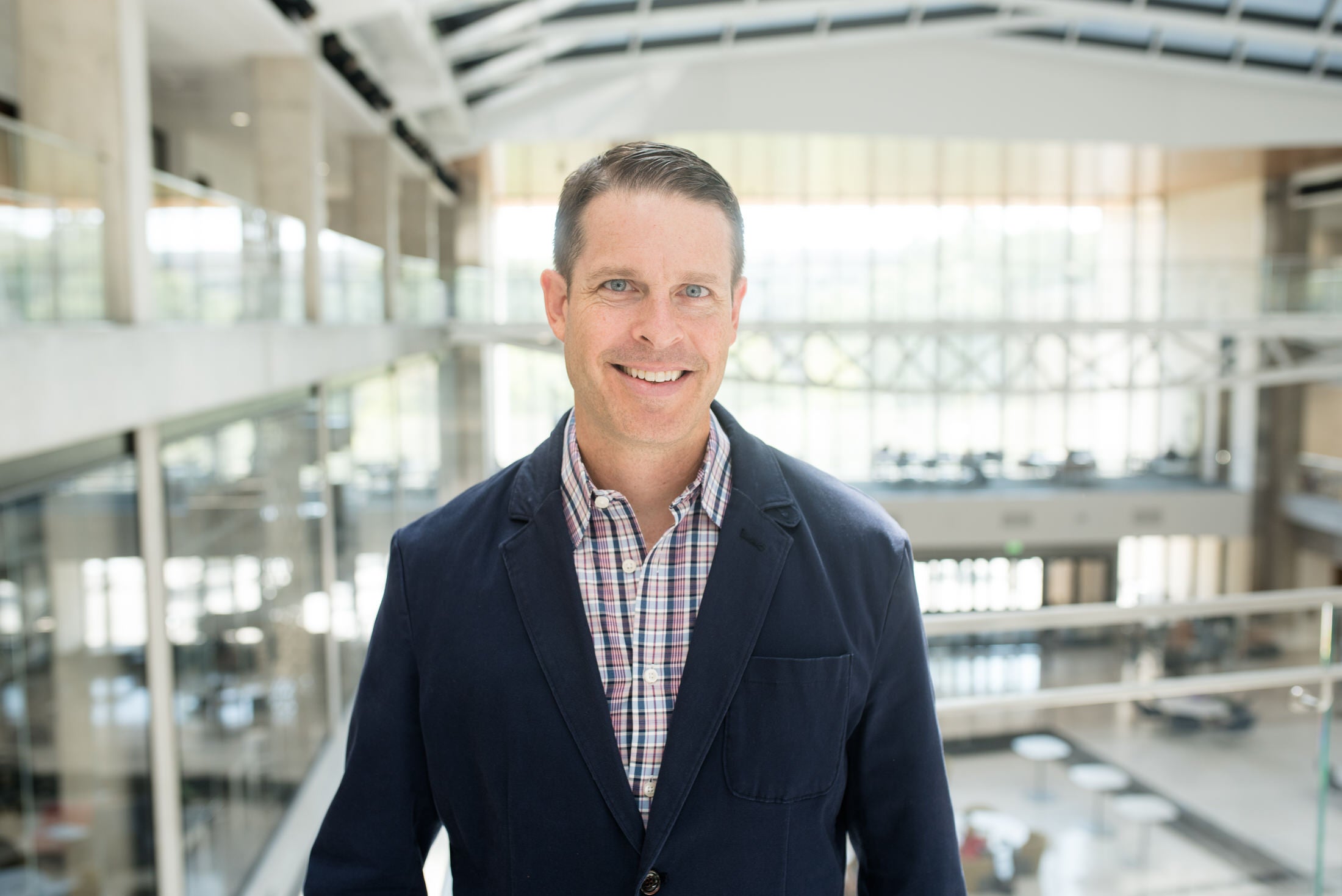
Texas Engineer Todd Humphreys.
“Humphreys’ team developed a way for ground vehicles like Waymos to know their position fairly reliably to about 15 centimeters, even in busy and unpredictable urban areas like downtown Austin. Google Street View licensed an evaluation version of the code.“
The technique has significant ramifications for congestion because it will enable seamless zipper merging if all vehicles are autonomous, strategic, and communicating well.
“Tight automated zipper merging mimics what water molecules would do as they encounter a bottleneck: fuse together in one stream and speed up, not down, to allow a continual flow,” he says.
Transportation engineering professor Kara Kockelman says that AVs will save lives and have the potential to reduce emissions if most of the vehicles wind up being electric or hybrid.
Kockelman and Jooyong Lee, who earned a Ph.D. in civil engineering with a focus on transportation engineering from UT Austin and is now an assistant professor in the School of Urban Planning and Transportation Research at Kynoggi University in South Korea, presented a paper at the 2019 Annual Meeting of the Transportation Research Board on the energy implications of self-driving cars.
While AVs could increase vehicle-miles traveled, they also could reduce emissions because most of the vehicles will be electric, the researchers predict in the paper that will soon be published in a new book.
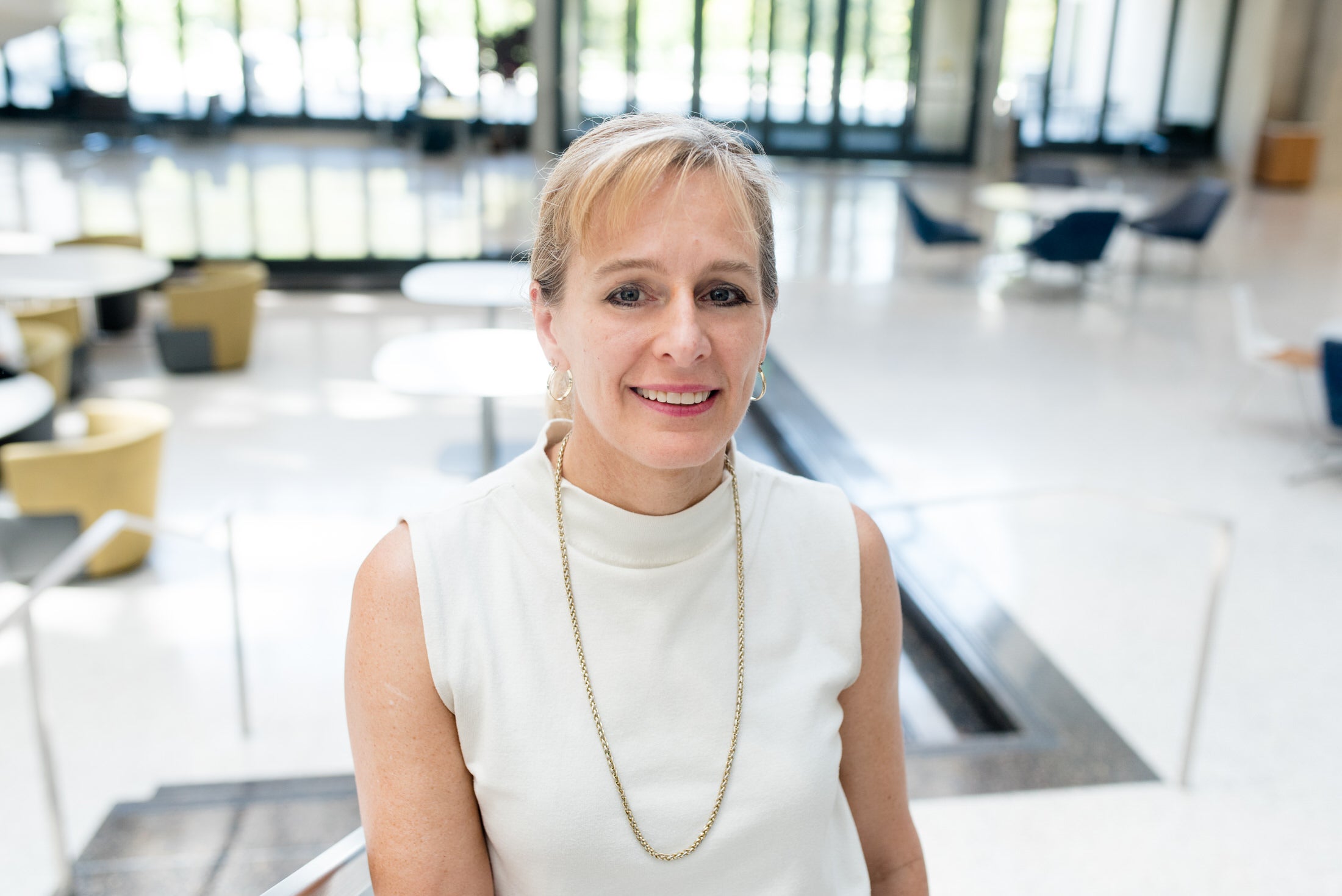
Texas Engineer Kara Kockelman
In 2020, her team researched the potential impact of autonomous vehicles across Texas, with a focus on the Triangle region (connecting Houston, Dallas-Ft Worth, Austin and San Antonio). Alongside Yantao Huang, who earned a Ph.D. in transportation engineering and is now a computational transportation engineer at the Argonne National Laboratory, she published a paper that does not bode well for regional congestion.
Statewide simulations suggest that the average travel distance in the region will go from 14 miles to 16 miles. And vehicle-miles traveled will increase 47% by 2040, without the implementation of regulations like credit-based congestion pricing.
Like Bhat, Kockelman sees transportation and land-use policy as intertwined. The Mueller neighborhood in Austin is an example of a well-planned mixed-use area. Dense neighborhoods make walking and biking more appealing, and “Alternative modes become much more competitive.”
But when it comes to congestion, one issue trumps them all for Kockelman: the U.S. doesn’t charge drivers for using roadways. It might be a tough pill for many people to swallow, but getting rid of congestion would require increasing gas tax and pricing roads by time of day in a way that considers when they are most heavily used. This makes you think twice before getting into the car for a non-essential trip.
“It doesn’t matter whether it’s apples or ice cream, health care or houses, or roads, you can’t offer something for free and expect it not to be over-consumed.”
— Kara Kockelman, professor, Fariborz Maseeh Department of Civil, Architectural and Environmental Engineering
GREEN LIGHT
Learn more about transportation engineering at the Fariborz Maseeh Department of Civil, Architectural and Environmental Engineering.
 |
|