

Michele Meyer retired after a decade at the Cockrell School, leaving a legacy of student success and a tighter Texas Engineering community.
by Nat Levy
There’s no “I” in team, the saying goes, and Michele Meyer embodies that. Ask her a question about her personal success, and the first word of her response is always “we.”
It’s a small but important detail that reflects Meyer’s personal mission and the impact she made at the Cockrell School of Engineering. She was instrumental in transforming the school’s culture, creating a more open and welcoming environment.
Meyer has retired after serving as assistant dean for student services at the Cockrell School for a decade. During her time, she served as a tireless advocate for engineering students and the people and programs that support them.
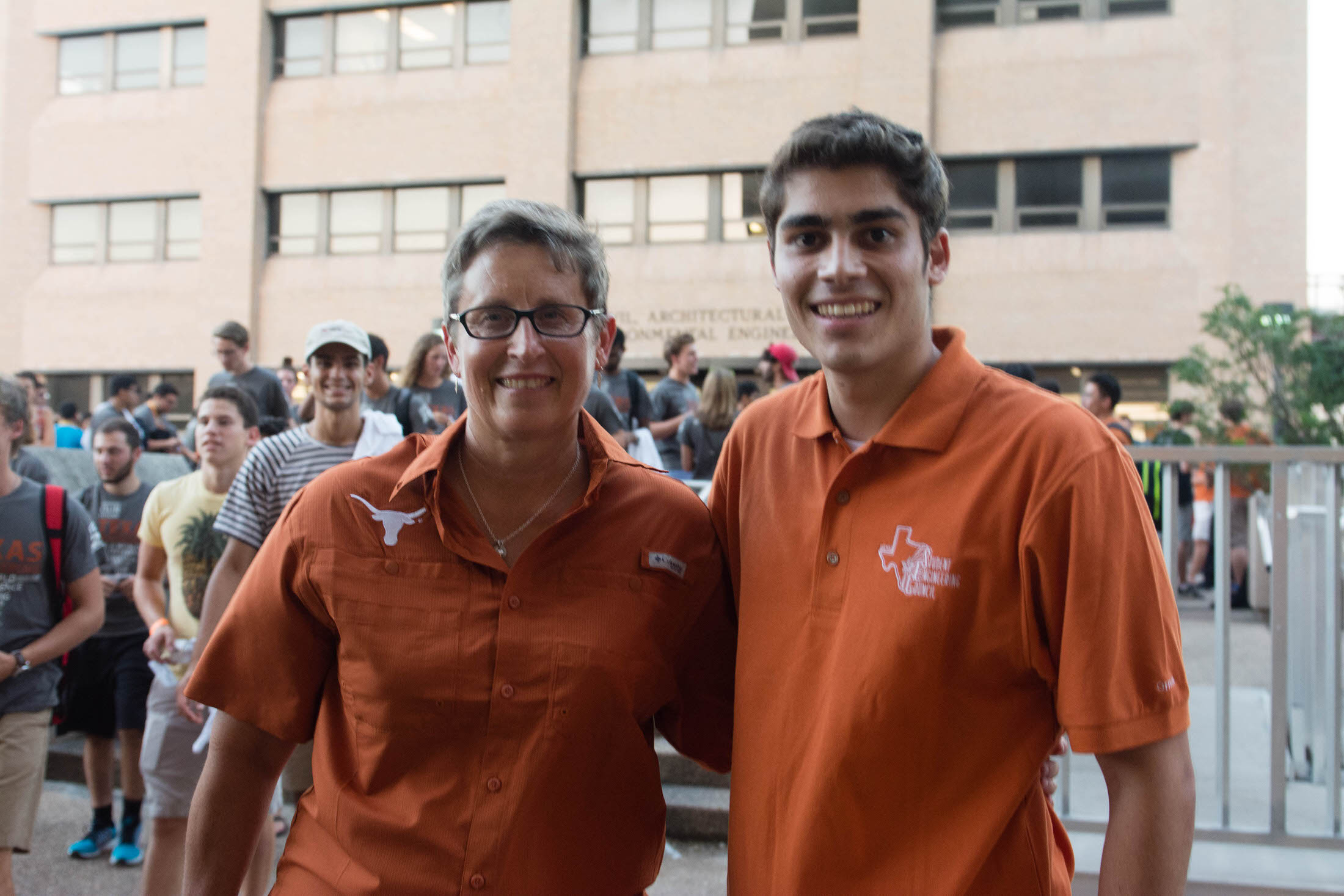
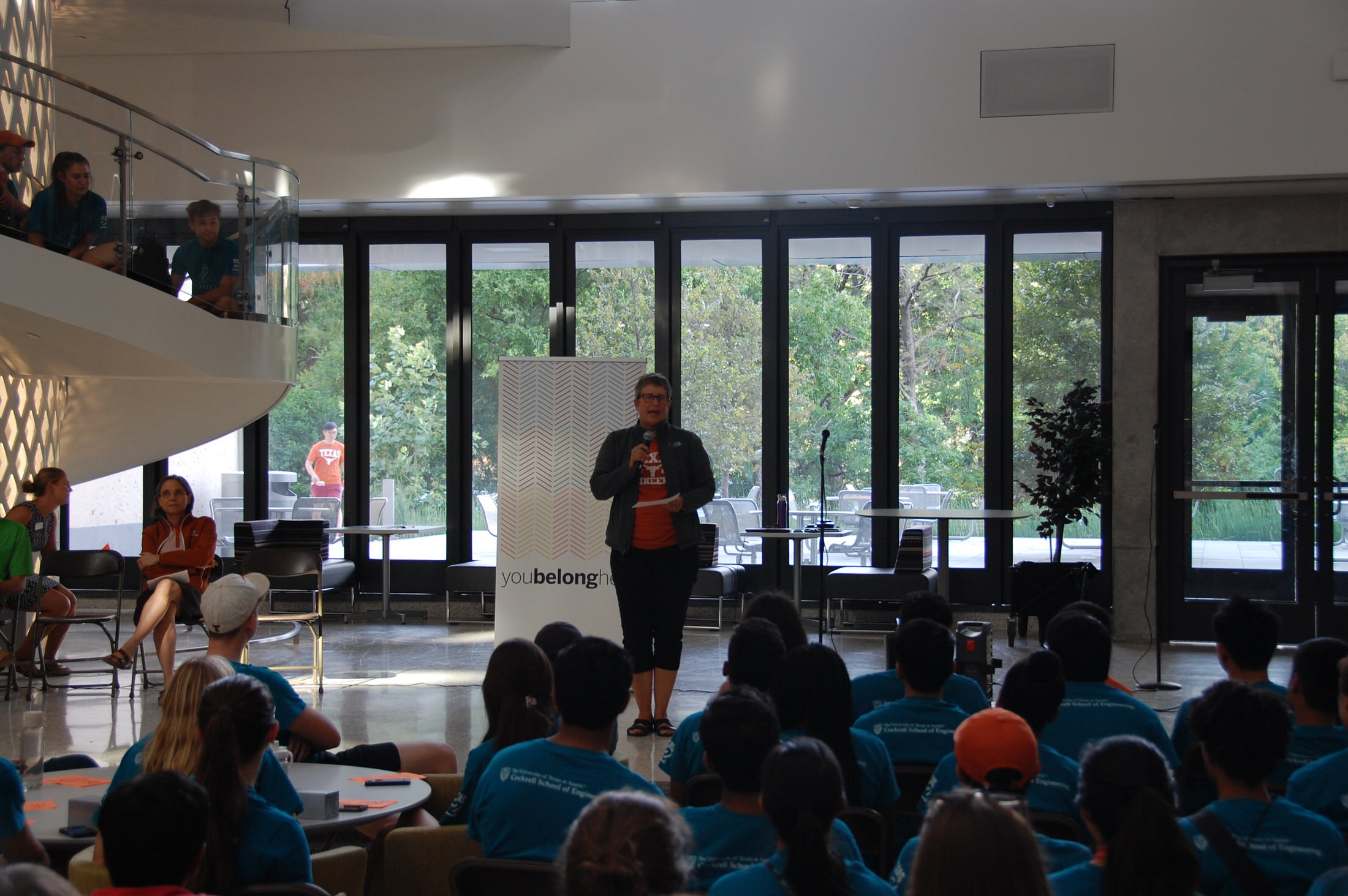
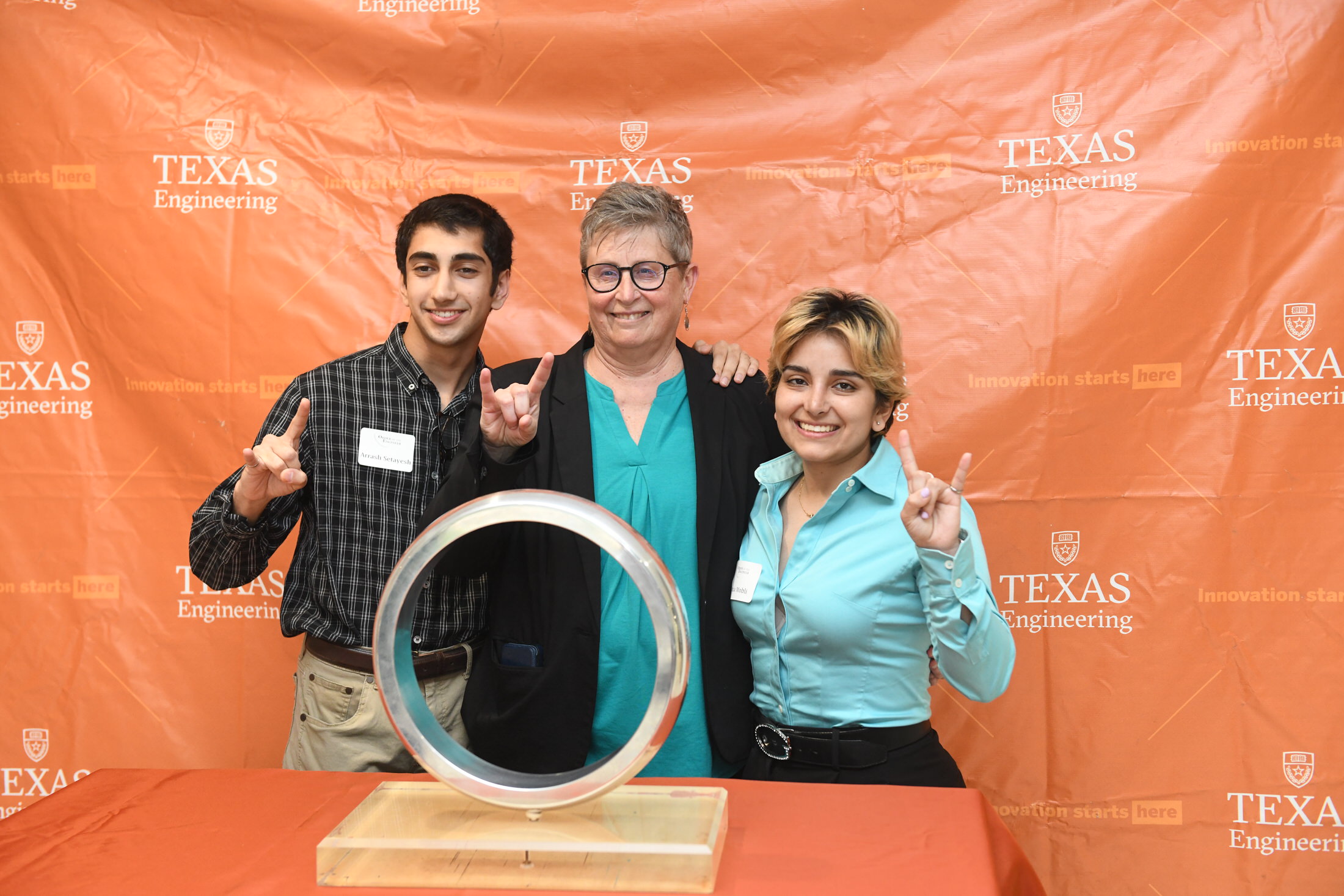
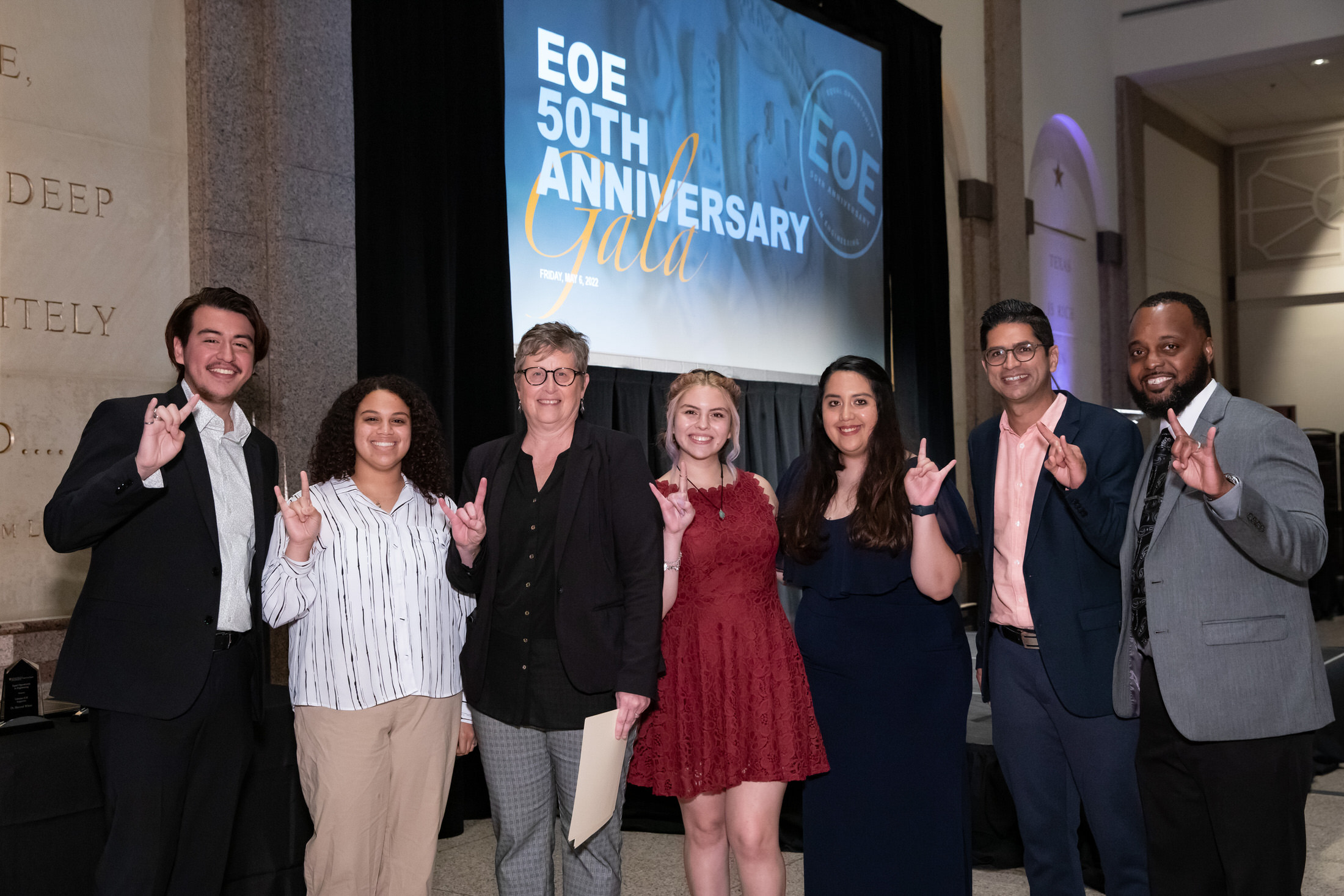
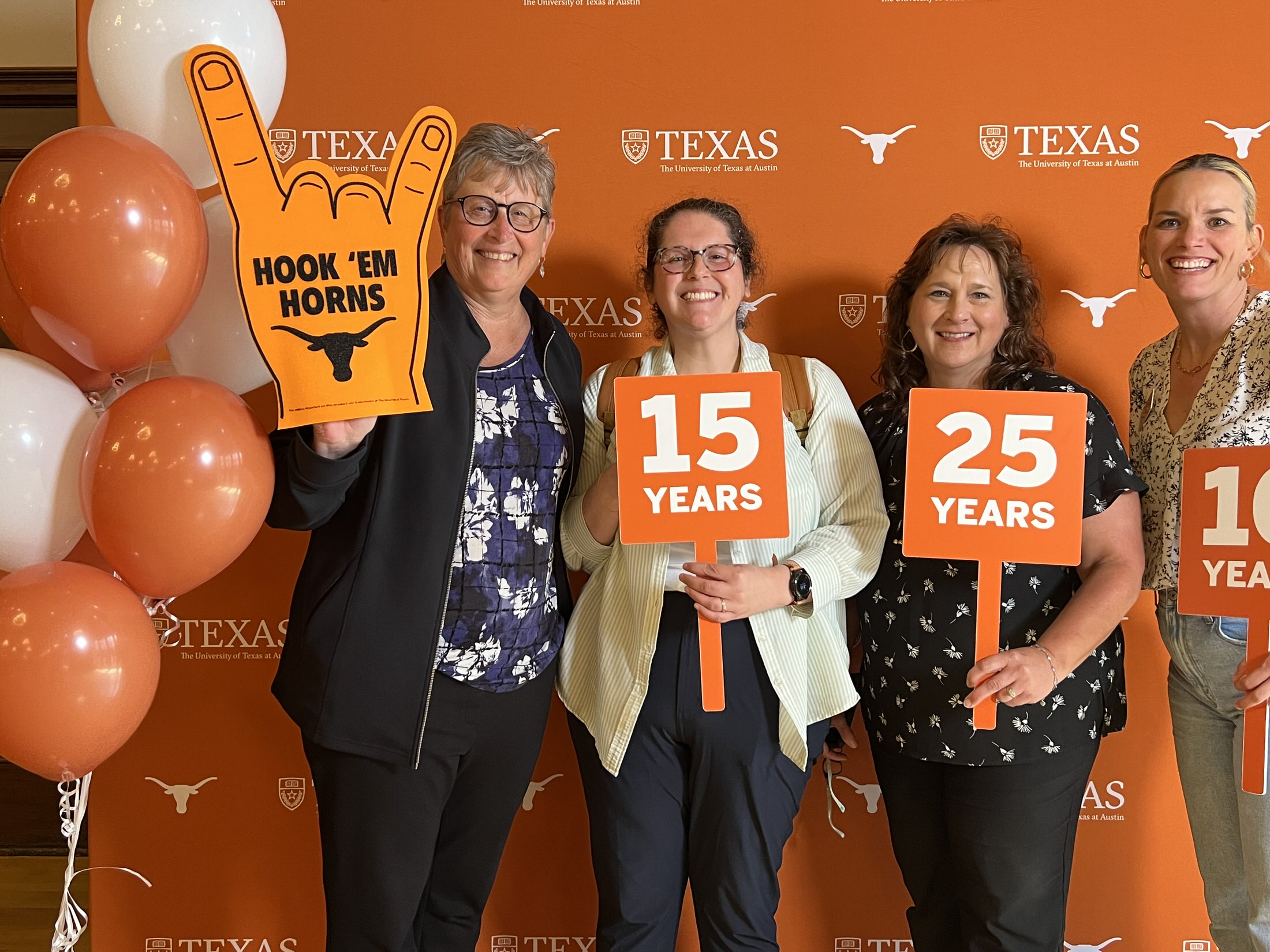
Meyer is not one to brag about her impact. So, we’ll do it for her.
The Cockrell School has seen a 41% reduction in academic dismissals during Meyer’s tenure, reflecting her team’s ability to help students stay on track and graduate on time.
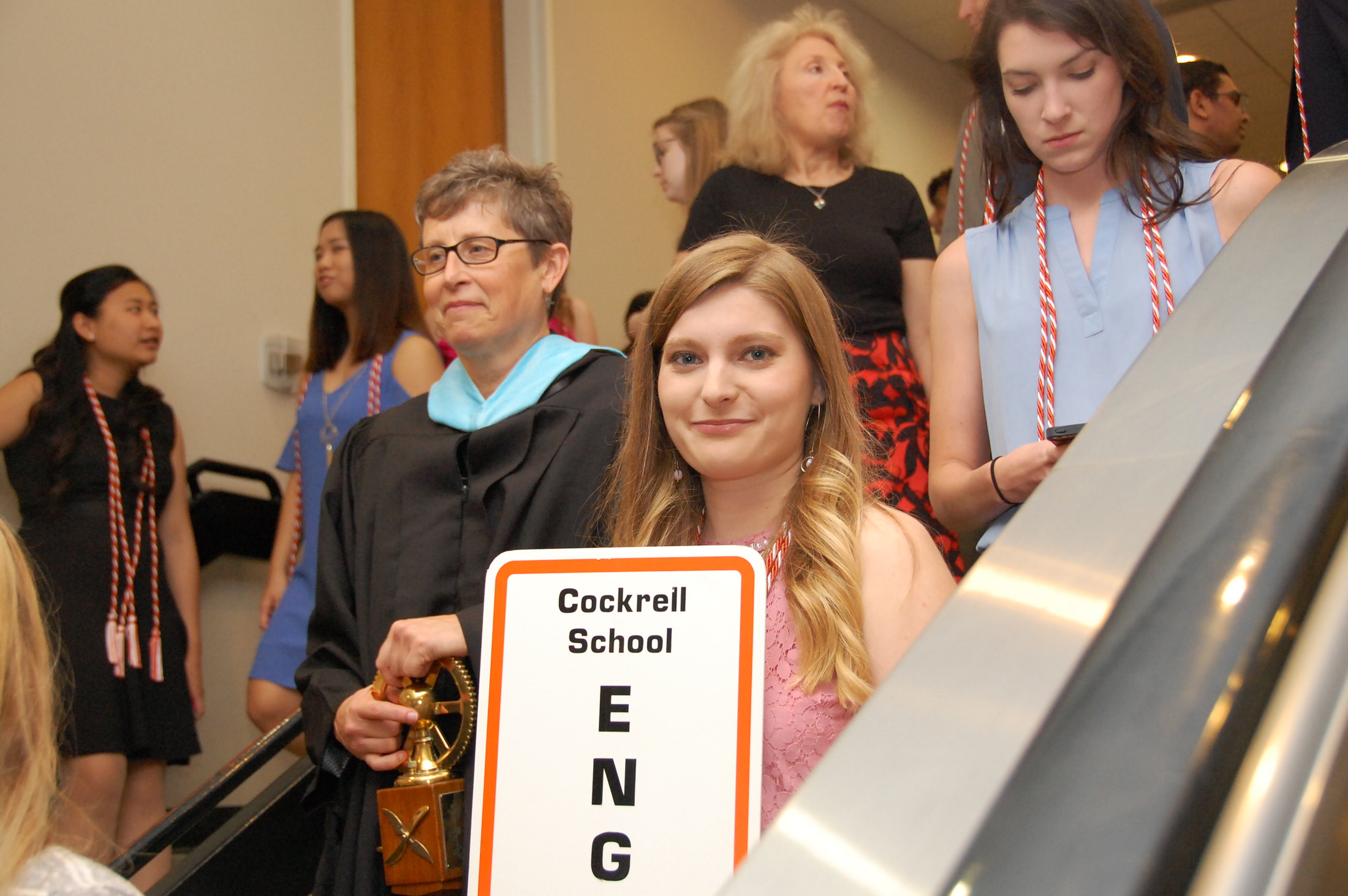
Throughout her tenure at Cockrell, Meyer has positively impacted the lives of more than 20,000 students and hired and mentored more than 50 staff members. She oversaw 13 commencement ceremonies, ensuring that each graduating class was celebrated with the pride and recognition it deserved.
“Michele and her team supported students at every point along their journey at UT, from orientation to their second, third and fourth years and recognizing that each of those years comes with unique and different challenges,” said Roger Bonnecaze, dean of the Cockrell School.
Meyer made the school feel like a smaller, tighter place. She and her team developed, implemented and grew new programs to help students find their people. And she instituted a program that has been deployed across UT to ensure no one falls through the cracks.
Everywhere she’s been, Meyer built community, from the halls of the Cockrell School to the hardwood in Wisconsin, where she stepped in after a sudden departure and coached her team to a national championship in volleyball more than 20 years ago.
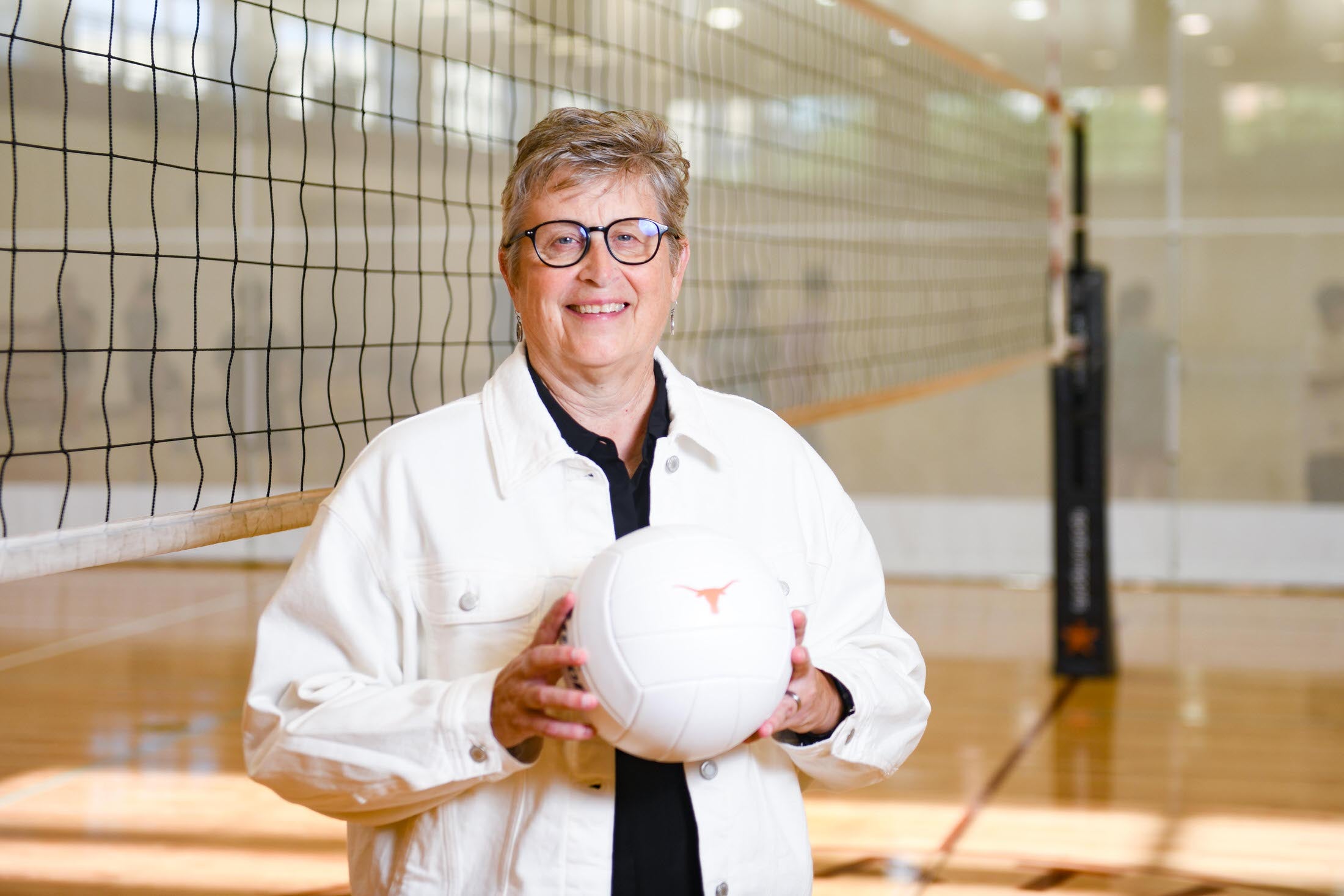
“I love coaching. I think it has had a really significant influence on how I think about my work with students and how to maximize the strengths that each person brings."
— Michele Meyer
A Welcoming Place
Meyer joined the Cockrell School in 2016 at a time when UT was developing new programs to help students succeed.
“Michele was exactly the right person at exactly the right time to implement a cultural change and achieve goals around supporting our students,” said Bonnecaze.
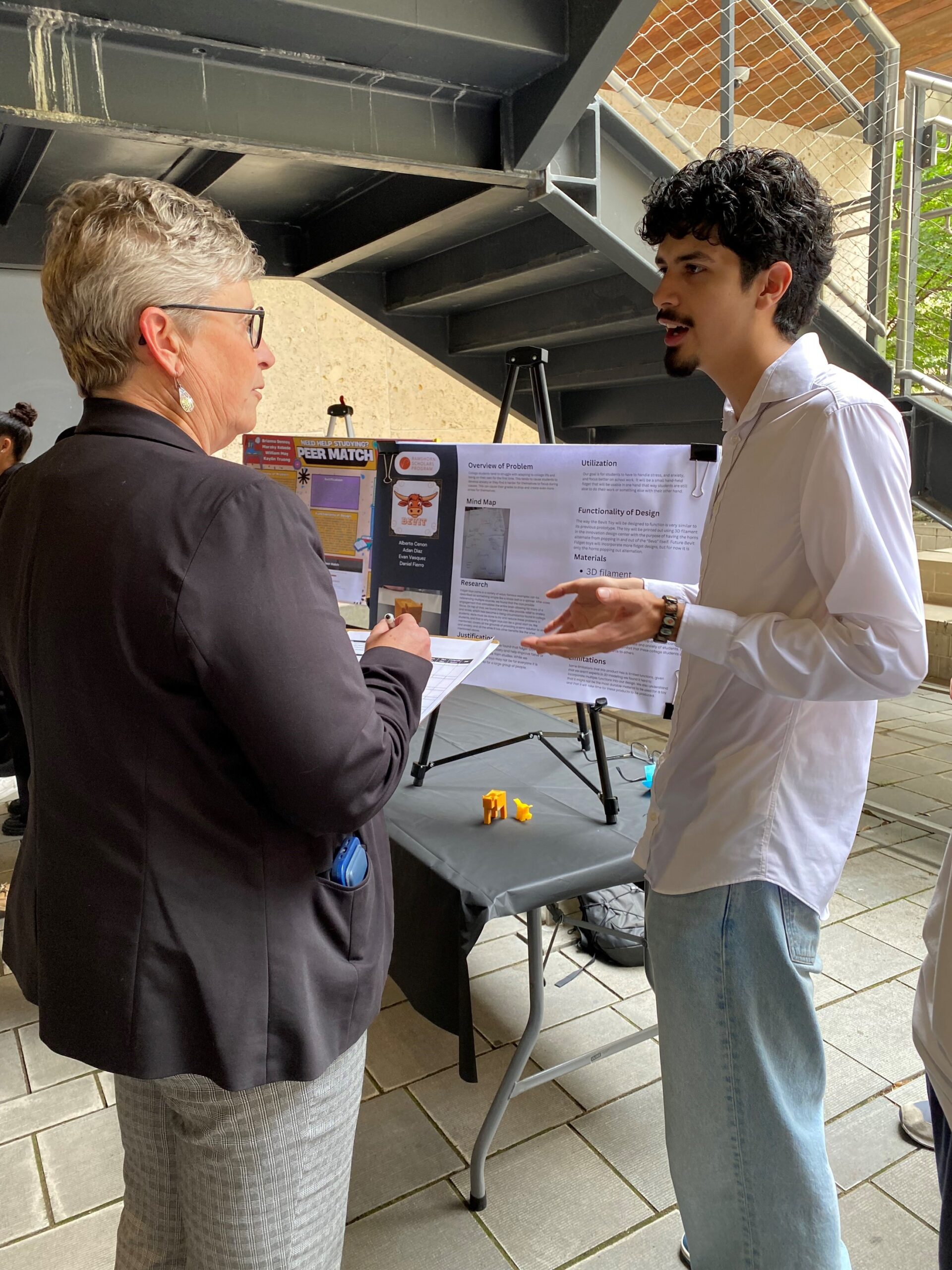
The Ramshorn Scholar program kicked off in fall 2016, Meyer’s first year on campus. Named for the elaborate checkmark that the Cockrell School’s first faculty member and dean, T.U. Taylor, used to give to top-notch papers, the program aims to ease the transition into engineering.
“Getting into UT is hard. Once you get in, we should be doing everything we can to help you stay.”
— Michele Meyer
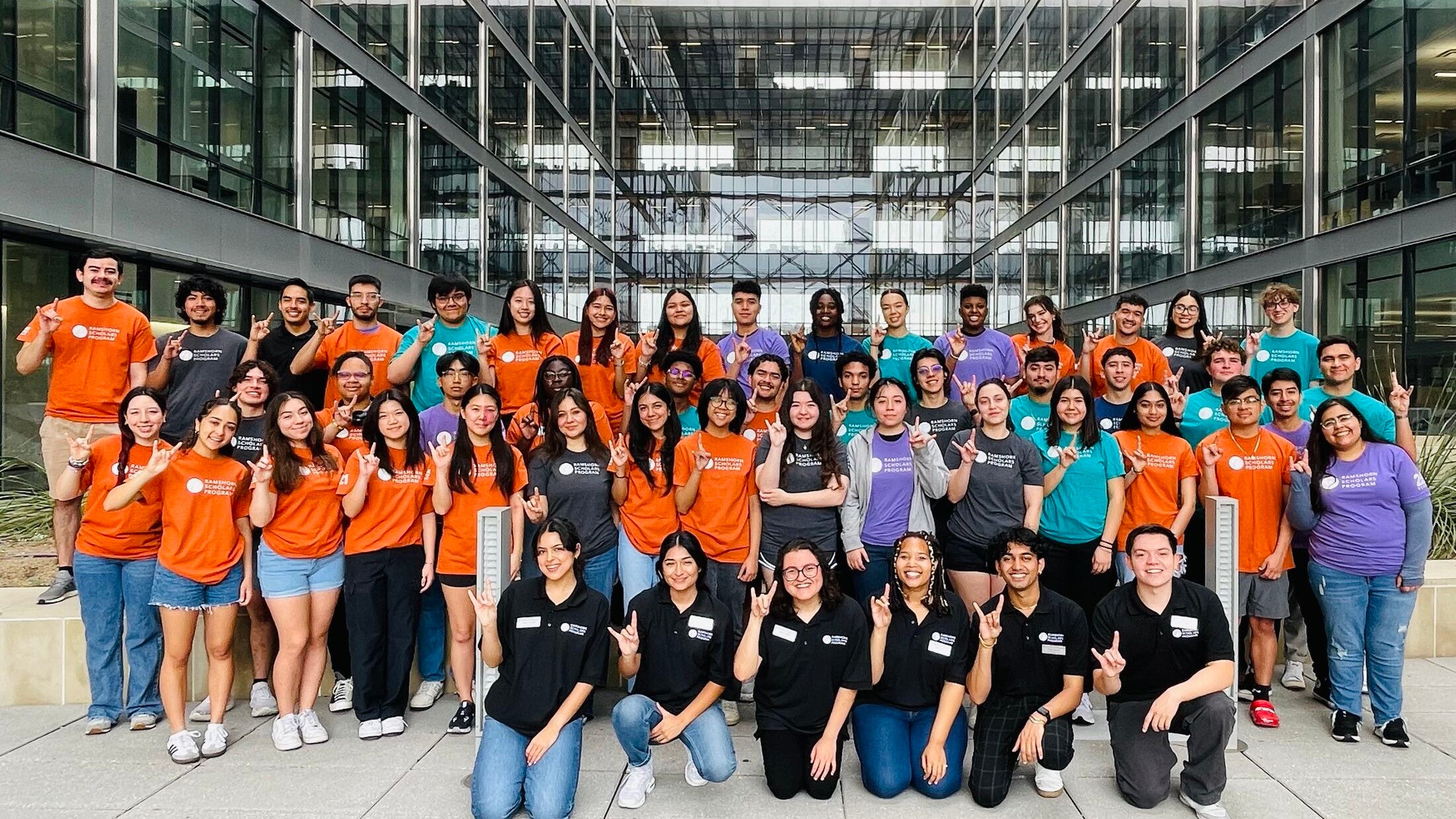
Members of the Ramshorn Scholars program.
The Ramshorn Scholars program has grown steadily as it approaches its 10th anniversary. This year, 165 students joined the program, a 45% increase over the initial cohort. Initially run by a single person, the program now has four staff members who help first- and second-year students through the challenging engineering curriculum with academic and community-building.
The second-year program includes study abroad offerings and increased career training. Thinking about life after graduation can dramatically improve motivation, said Rebecca Silverblatt, director of the Ramshorn Scholars program.
“When you start a program, and she helped kick it off, there’s the foundation you have to establish, the basic elements of the program we’re creating,” Silverblatt said. “As time goes on and the foundation becomes more solid, you can add layers to it and be more intentional about what we’re doing.”
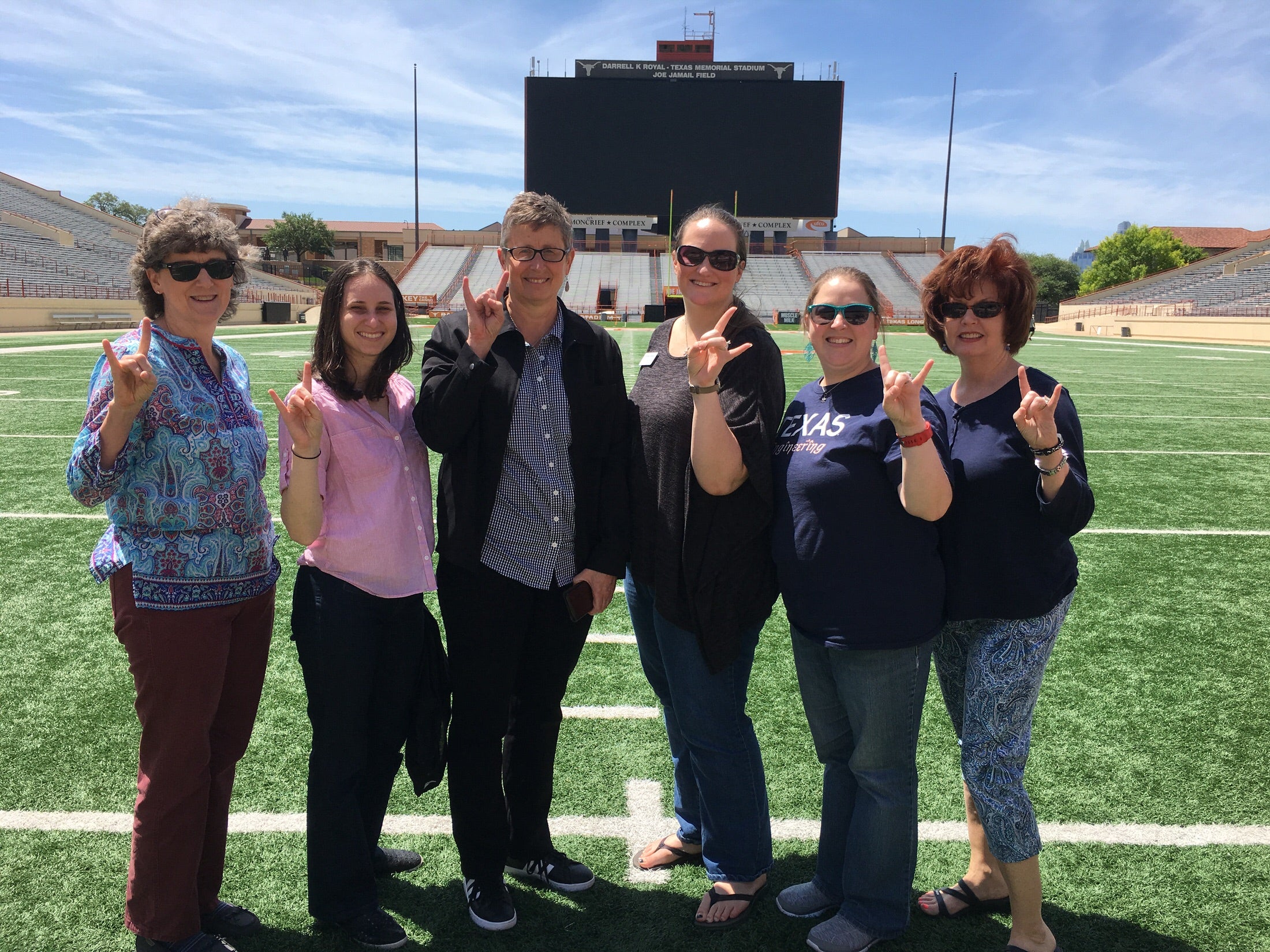
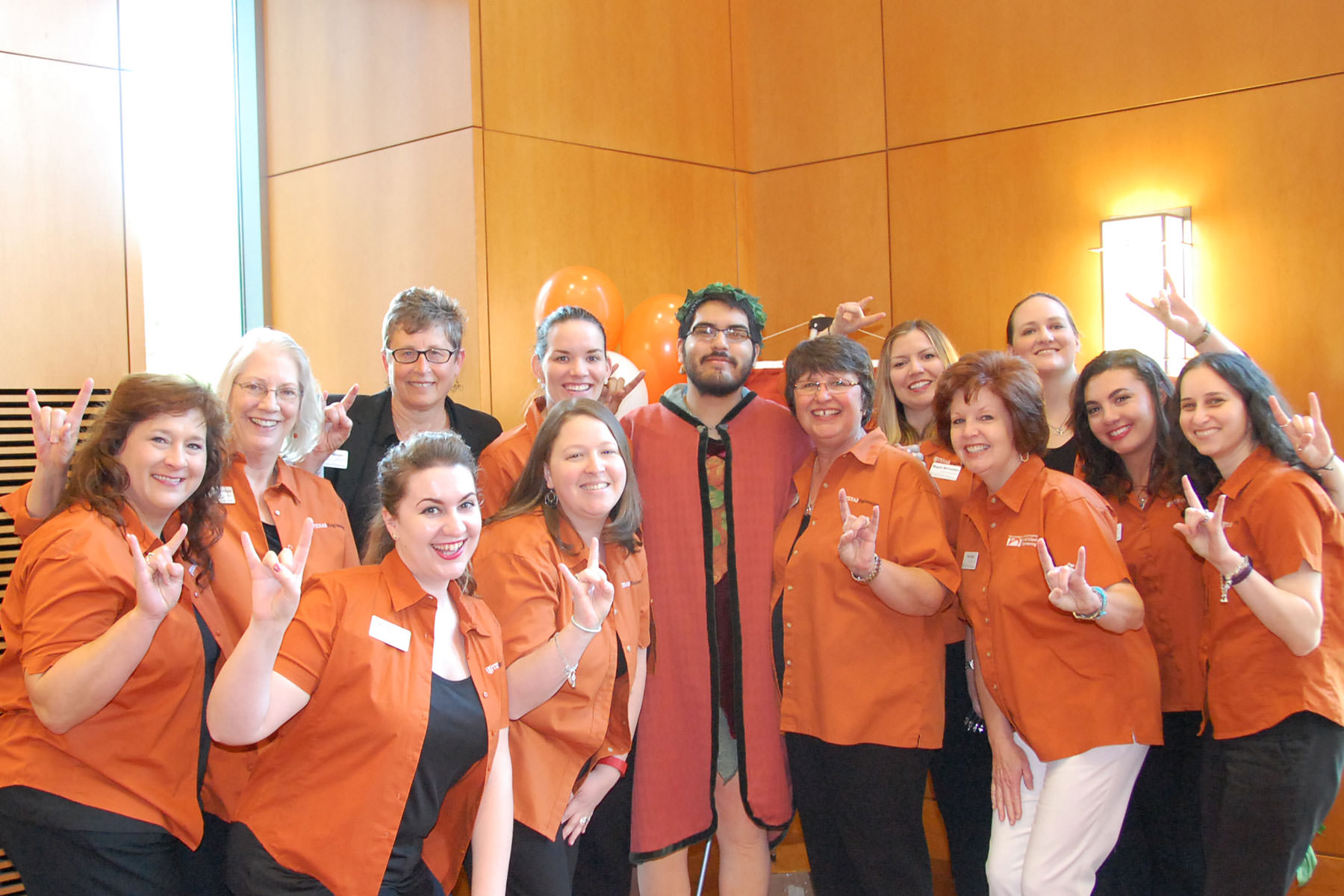
Michele Meyers with colleagues from Engineering Student Services.
New Ground
A few years ago, Meyer implemented a new software program that enabled faculty and staff to identify students in need of extra help faster. The school lacked access to immediate data on grades, so if a student struggled, it would take six to eight weeks to identify an issue. For some students, it would be too late.
The program has worked so well that UT began using it campus-wide this year.
“We’re able to work with students in the first couple of weeks versus not hearing from them until the end of the semester, when it makes it really difficult to come back,” Meyer said. “It’s much easier to get back on track when you start doing it in week three versus week 12 of a 15-week semester.”
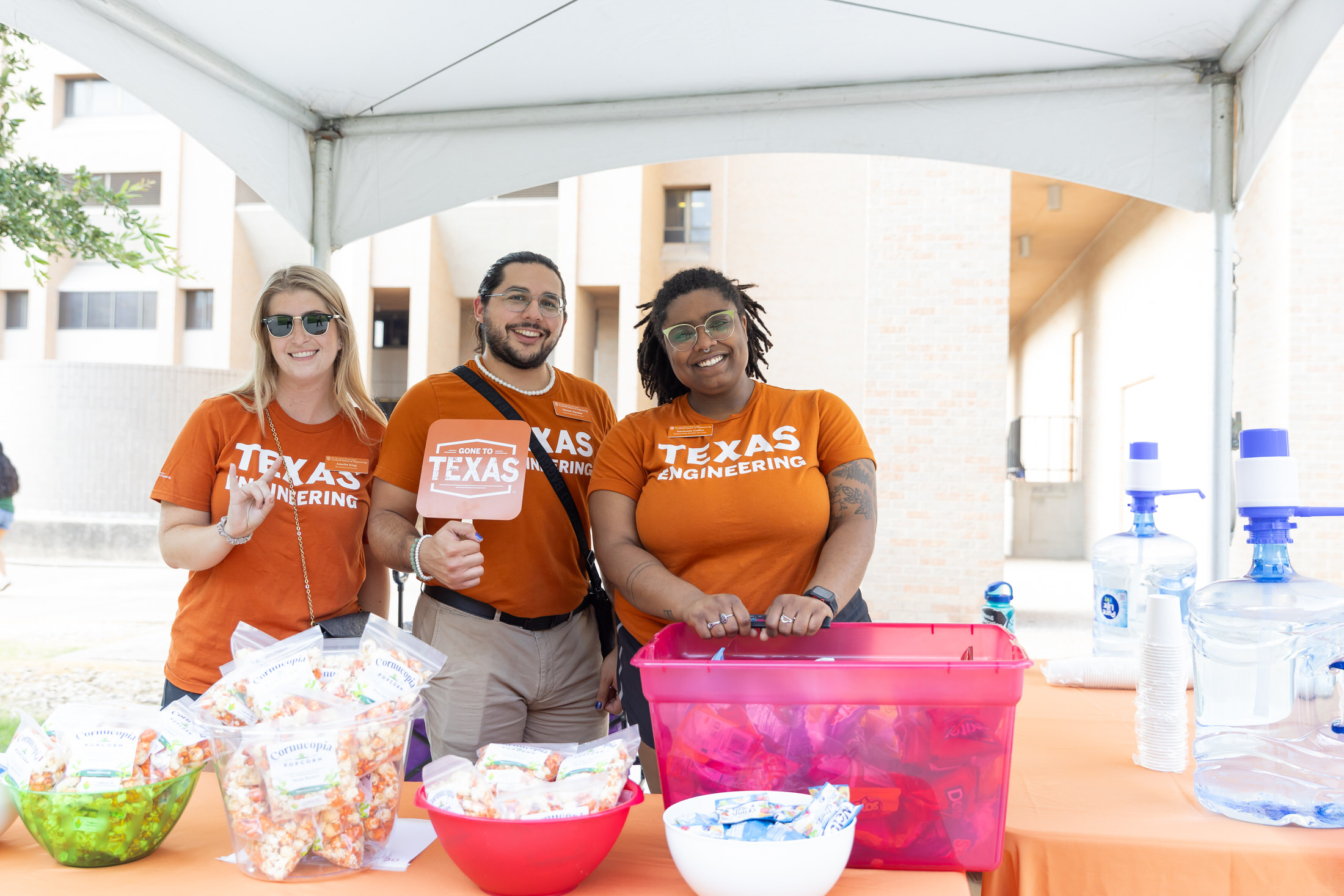
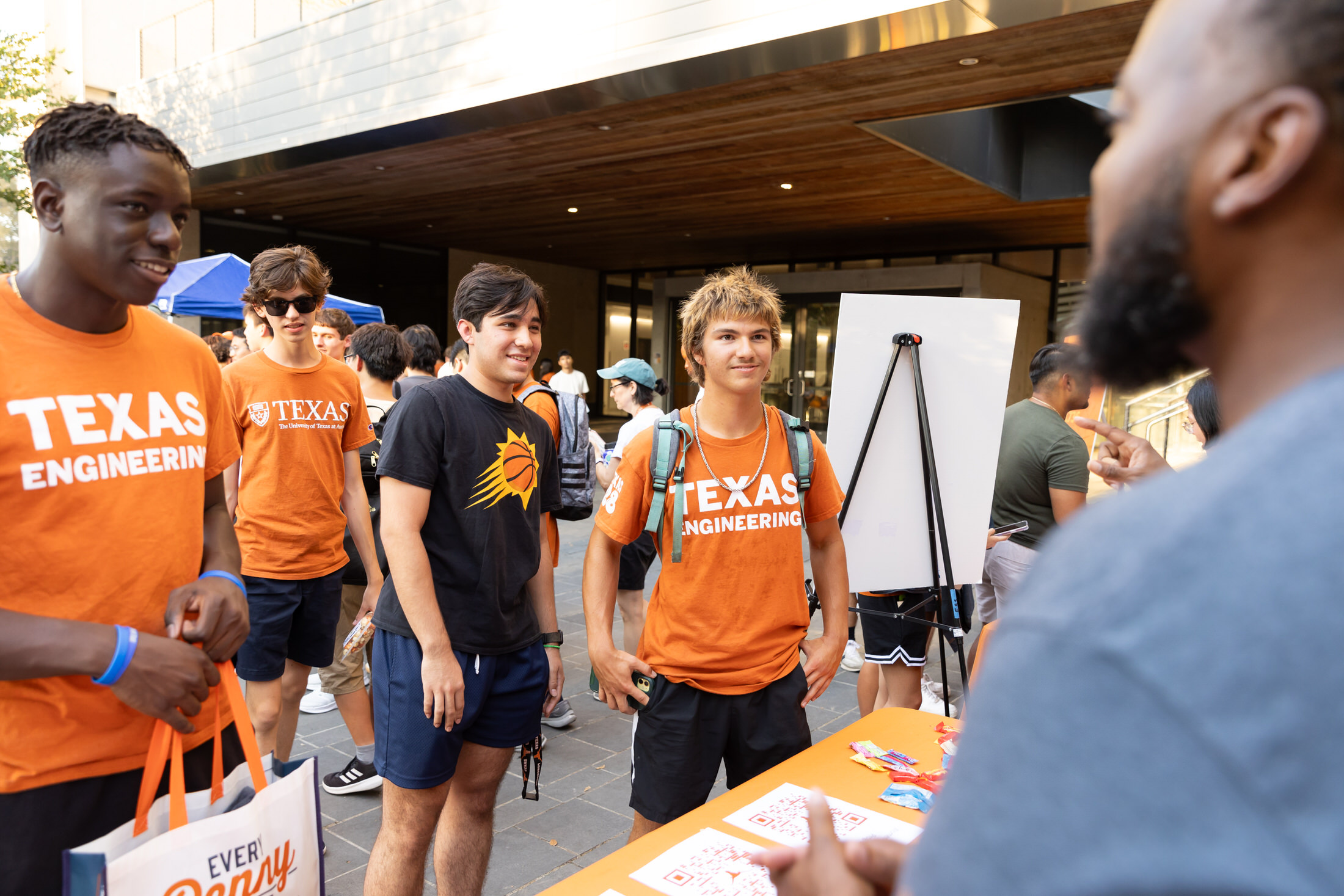
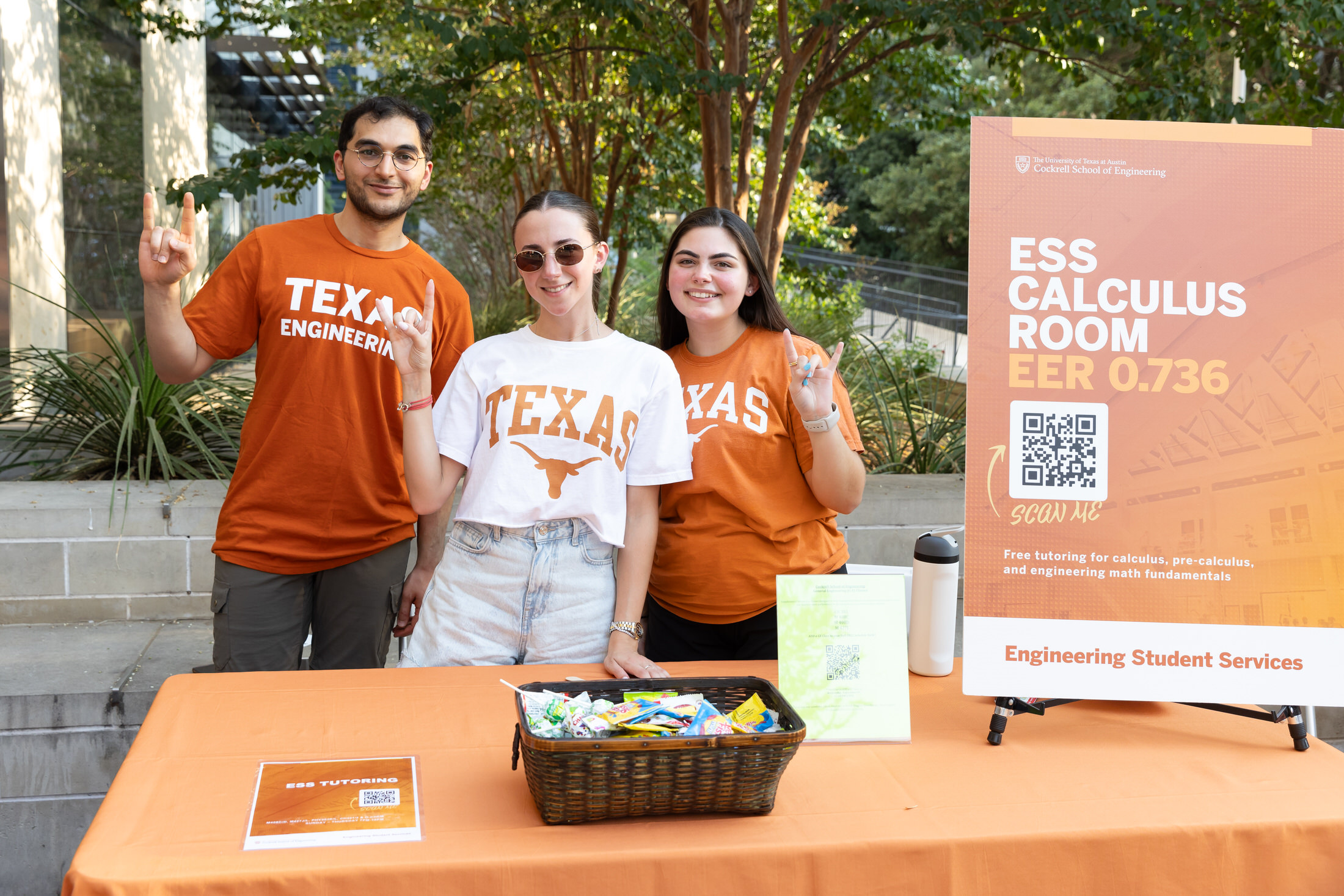
On her way out, Meyer is leaving the Cockrell School with one more tool to help students succeed—a new gift from electrical and computer engineering faculty members Nina and Vivek Telang. Meyer helped secure the gift last fall to expand an academic coaches’ program—there’s the coaching influence again—beyond a student’s first year.
The Telang Family Academic Achievement Program will kick off spring 2026. As part of the program, a group of student coaches will provide academic, personal and professional support to their peers. It also opens up the potential to hire more staff to run this and other programs and, ultimately, help more students.
Meyer’s student-centric approach has set the school on a more welcoming path. It will be critical to continue building momentum, implementing new programs and focusing on enabling all students to thrive.
“We’ve worked really hard to develop the kind of culture and community that values retaining those students,” Meyer said. “We have a responsibility to help students be successful. That doesn’t mean doing the work for them; it means giving them the resources they need to achieve their success, and they get to decide what that is.”
Coach Mindset
Meyer’s desire to help others succeed stems from her coaching days. She started, as most coaches do, as an athlete. She played volleyball all four years as an undergraduate at the University of Wisconsin-Lacrosse.
After a few years of working in insurance, she returned to school. She earned her master’s degree in mental health counseling from the University of Wisconsin-Superior, where she also served as a graduate assistant coach on the volleyball team. For her next move, she joined Northland College—a small school in Wisconsin that also happened to be a volleyball powerhouse, winning national championships in 1982 and 1989—to pursue a career as a mental health counselor.
Just before the 1992 season, the Lumberjills’ volleyball coach was let go. Meyer stepped up to fill the void, taking over as head coach.
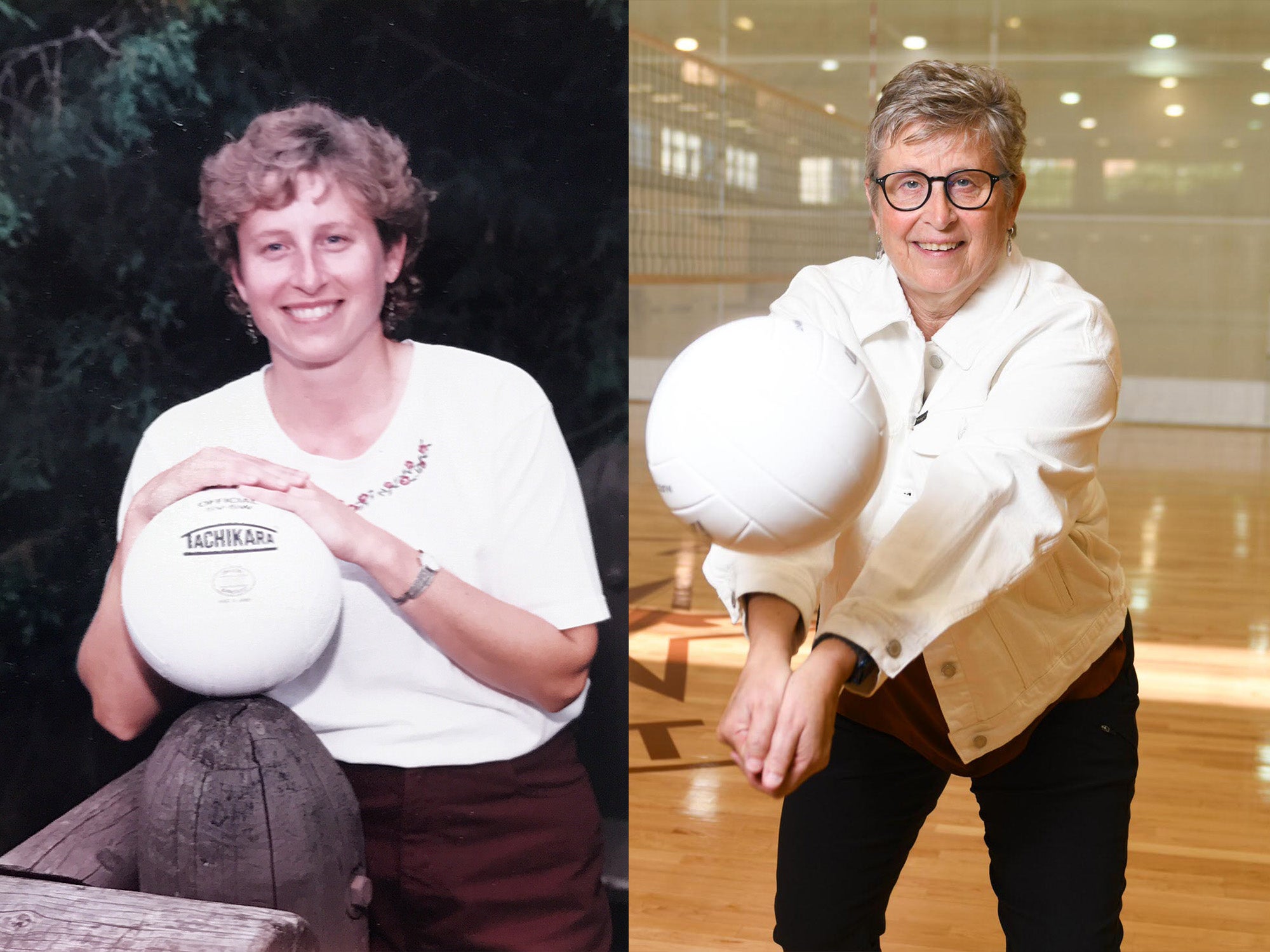
Then and now: Coaching has always been a part of Meyer’s life, from her time on the hardwood to her leadership style at the Cockrell School.
It was a tough situation, recalled Nevelyn Young-Williams, who played for Northland during the transition and later became an educator herself. Some players were loyal to the previous staff. But Meyer got the team to buy into her vision by listening to their concerns, being open and creating a fun, but hard-working environment.
“We joked around a lot. Coach Michele would run this drill to make us get down low to dig, and we decided to play a prank based on it,” Young-Williams said.
“In the middle of the night, we all went to her house, we used plastic spoons and knives and put them in the shape of a volleyball and spelled out get low on her lawn. The next day at practice, she told us she had to get low to get those things out.”
The players bonded over pranks like this, Williams-Young said, but it also brought them closer to the coaching staff. They felt comfortable talking to Meyer about anything, from on-court play to life challenges.
This style proved effective, and the team went on to win a national championship in Meyer’s first year as a coach. She stayed on for two more seasons, bringing her coaching career to a close but forever shaping her leadership style.
Meyer stayed at Northland until 2015, eventually becoming the university’s vice president of student affairs. All these experiences, from coaching to mental health counseling to leadership, made Meyer into the person she is today.
Lasting Impact
Meyer also made a significant impression on the people around her. Young-Williams, the former player under her at Northland, is now a fourth-grade reading and social studies teacher at Paschall Elementary in San Antonio.
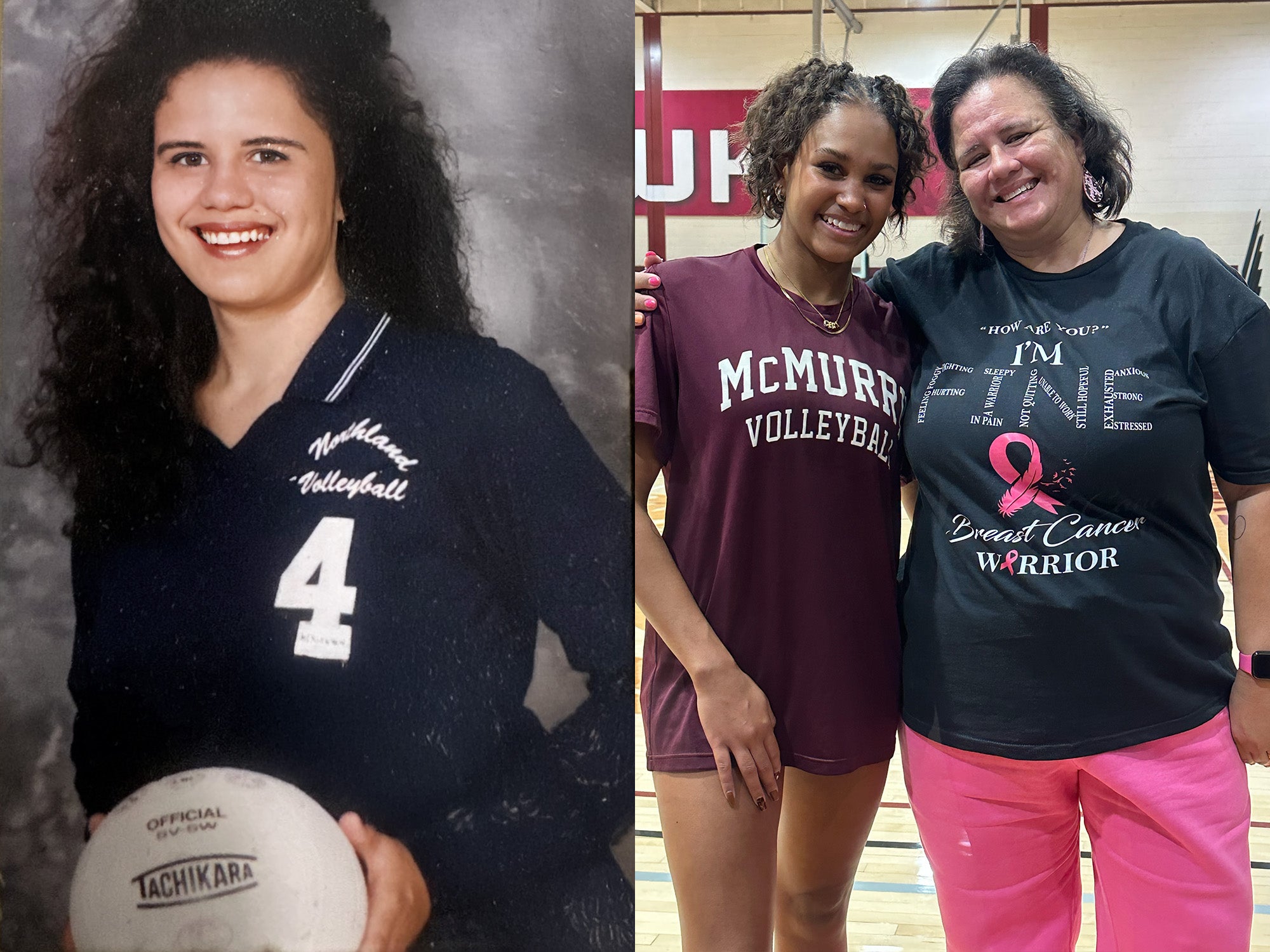
(Left) Nevelyn Young-Williams played for Meyer at Northland. (Right) Her daughter Marcette Williams now plays volleyball at McMurray University in Abilene. Photos Courtesy Nevelyn Young-Williams.
“I learned from her to always listen and do everything I can to build confidence. I ask my students to reflect and try to find answers themselves before I give them any suggestions.”
— Nevelyn Young-Williams
Meyer brought a similar culture of listening and openness to the Cockrell School. As she continues to lead the Ramshorn Scholars program, Silverblatt plans to emulate the focus on honesty and transparency that Meyer emphasized as a leader.
The Engineering Student Services leadership meetings today resemble those Northland volleyball practices from the early ‘90s—a safe space for people to laugh, work through hard problems and bond. These moments help to remind staff of the importance of connecting as coworkers, but also as humans.
“To work for somebody who you know truly values you as a person and as a professional, it’s so important, and she shows that to the staff all the time. It’s something I’ve carried with me to show to my staff.”
— Rebecca Silverblatt
SUPPORT OUR STUDENTS
We’re always finding new ways to give our students additional resources they need to succeed. You can make a difference for our students by supporting our Ramshorn scholarship program.
 |
|