by Nat Levy
May 31, 2013, was the deadliest day in the history of the Houston Fire Department. On this day, five firefighters died in a hotel structure fire.
It was a tragedy across the firefighting community, and it broke the heart of a young Siddharth Thakur. He got to know several of these firefighters as part of a personal passion project aimed at making their jobs safer: a network of sensors that could detect wildfires.
In that moment, Thakur’s mother posed a question that would define the next decade of his life and likely beyond: What are you going to do about this feeling you have?
With an uncommon level of courage and determination at such a young age, this tragedy sparked a personal mission in Thakur. He refused to sit back. He had to do something.
“I reached out to my local fire chief, and I sat down with him and asked how did this happen? And he explained just how common structure fires are and how firefighters rush into the smoke, fire, debris and chaos, often with limited or no technology to help them understand what they’re up against, trying to save people, property, and lives. And no one’s building for them.”
— Siddharth Thakur
“Motivated by this, I said, ‘What if I built technology to support you?’ That’s how the first version of FireBot came about.”
Thakur remains on that path today. He has spent the last decade, starting in high school, through his time at The University of Texas at Austin, and now as the leader of his own company, developing a robot that can navigate burning buildings and other hazardous areas to provide firefighters and other first responders with better intel about what they are up against.
Forty Acres + One Idea
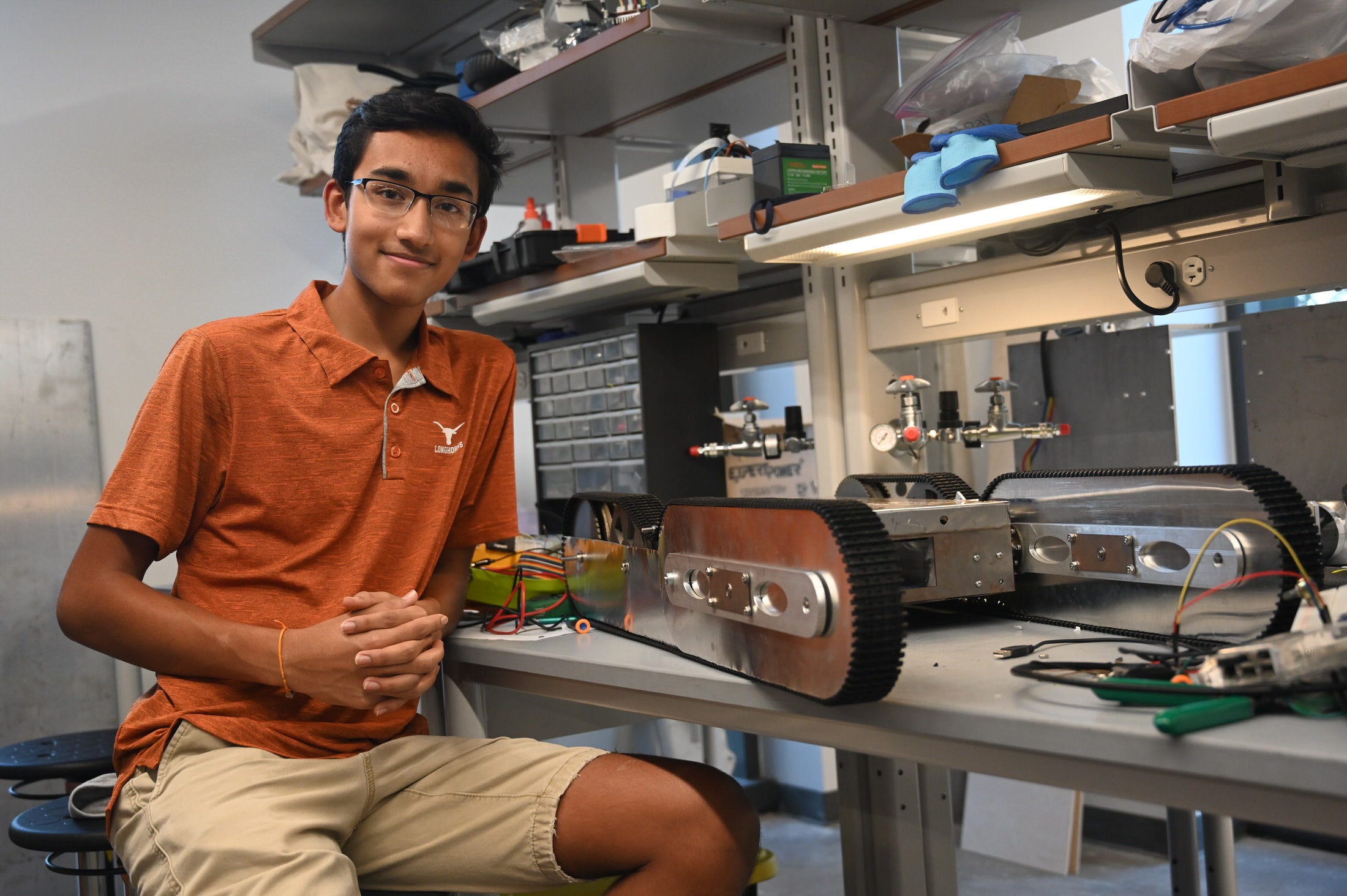
Siddharth Thakur in 2021, soon after coming to UT. Photo courtesy Siddharth Thakur.
I first met Thakur in the fall of 2021, just a few weeks into the school year, and it was clear even back then that he was going places. He walked into UT already on the third version of the firefighting robot, which now represents the backbone of his startup, Paradigm Robotics.
He walked out last spring with a degree in electrical engineering and an enhanced version of FireBot built by a dedicated staff of student engineers and refined through dozens of partnerships and valuable business relationships.
Today, the rugged, unmanned robot can traverse difficult terrain to enter burning buildings and other dangerous situations to search for hazards and signs of life. It’s operated remotely and loaded with thermal cameras to give its drivers insight into what’s happening.
Its technology is protected by layers of heat-resistant material, able to withstand temperatures of more than 1,250 degrees. It’s also dust-proof, explosion-proof, and bullet-proof. A roof could collapse on it, and it could keep going, Thakur said.
As Thakur himself matures, the company is growing up around him. Just a few months ago, Paradigm secured its first big-kid place, leaving its previous home at UT’s Texas Inventionworks for a location near the J.J. Pickle Research Campus in North Austin. And Paradigm Robotics raised nearly $4 million over the summer to continue its growth.
Talk about a graduation gift—Thakur actually got a call during the Cockrell Commencement ceremony last May telling him that the final check in the company’s pre-seed raise had closed.
Thakur and his team worked hard to build the fourth version of FireBot and secure funding to continue the company’s growth. Photos courtesy Paradigm Robotics.
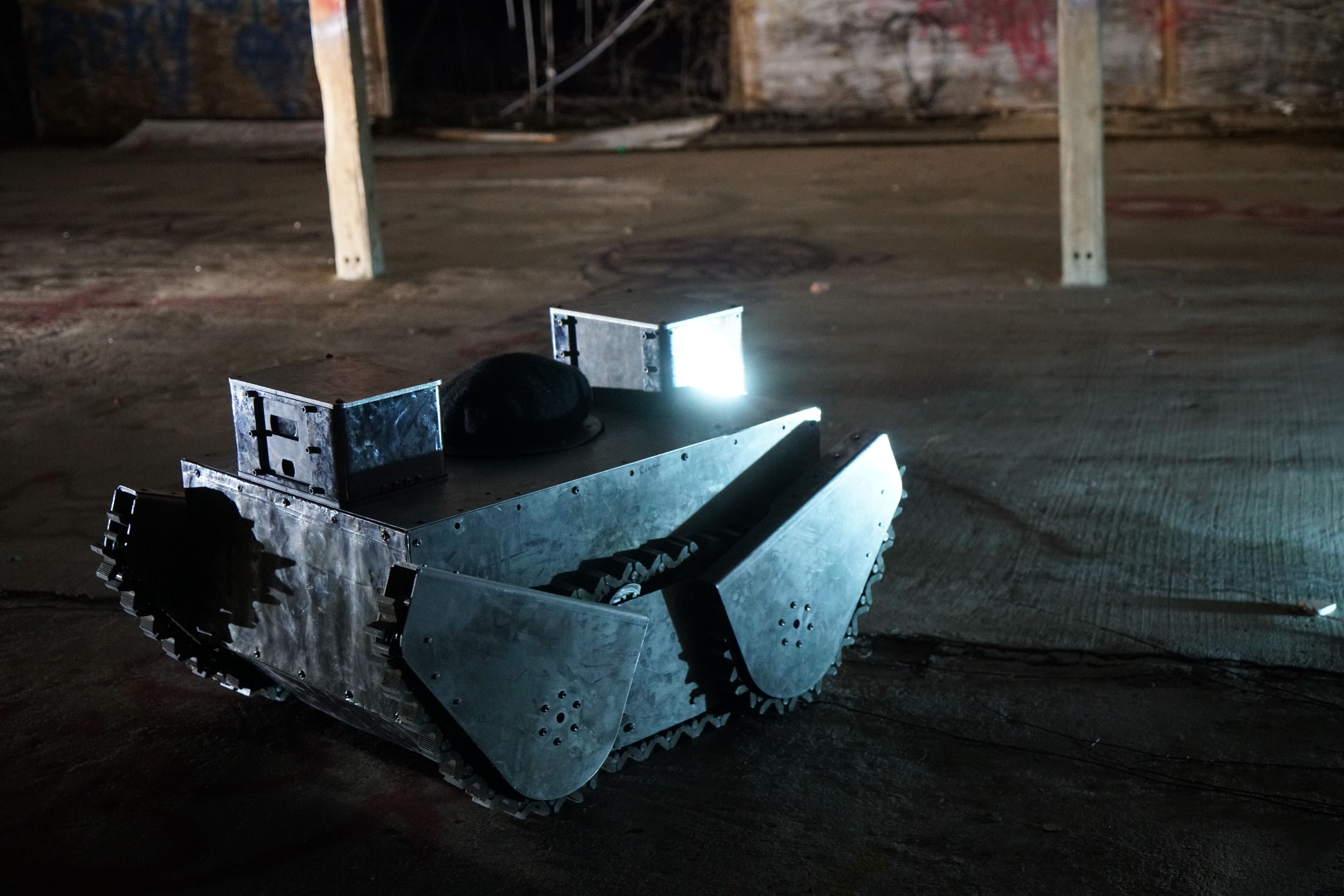

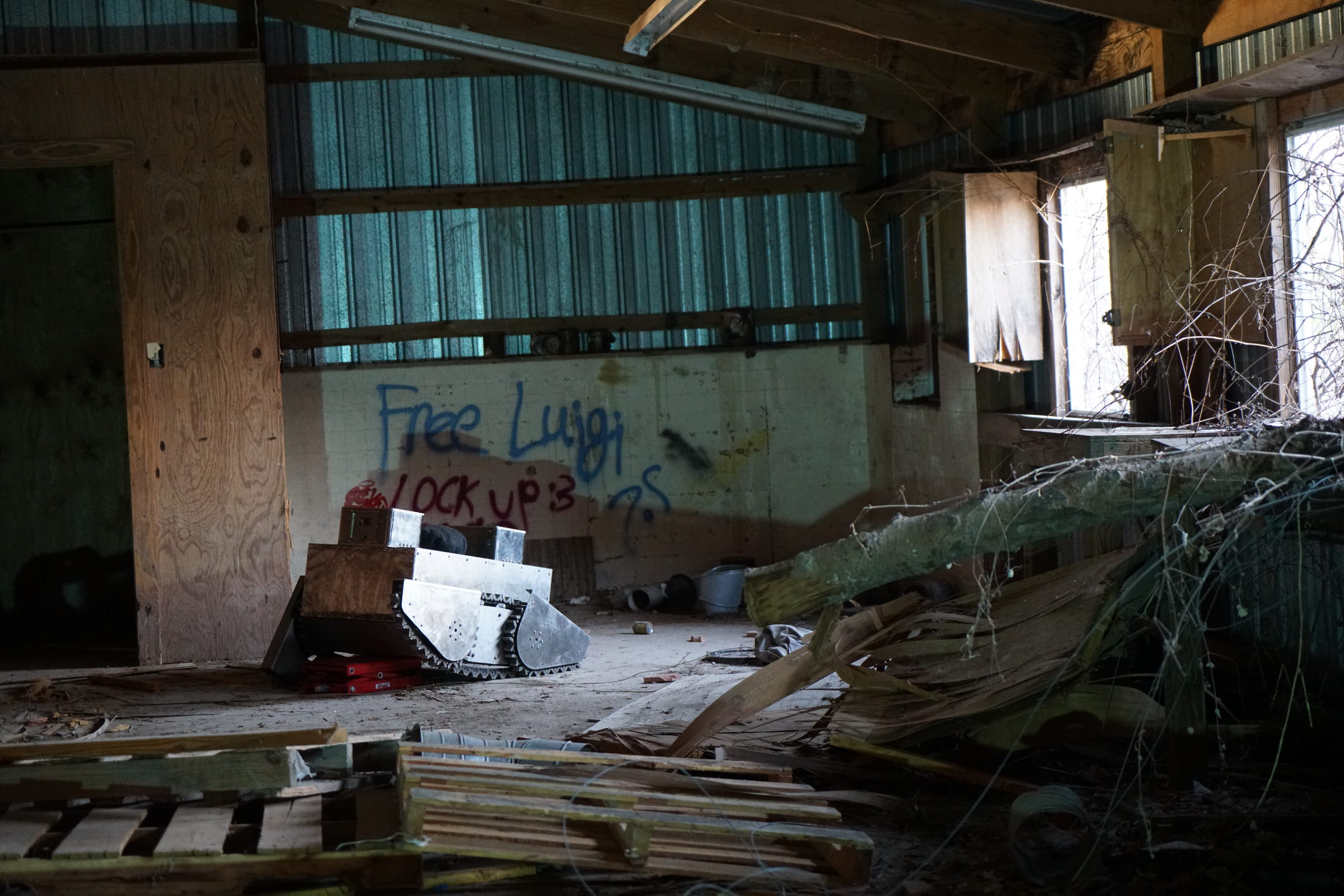
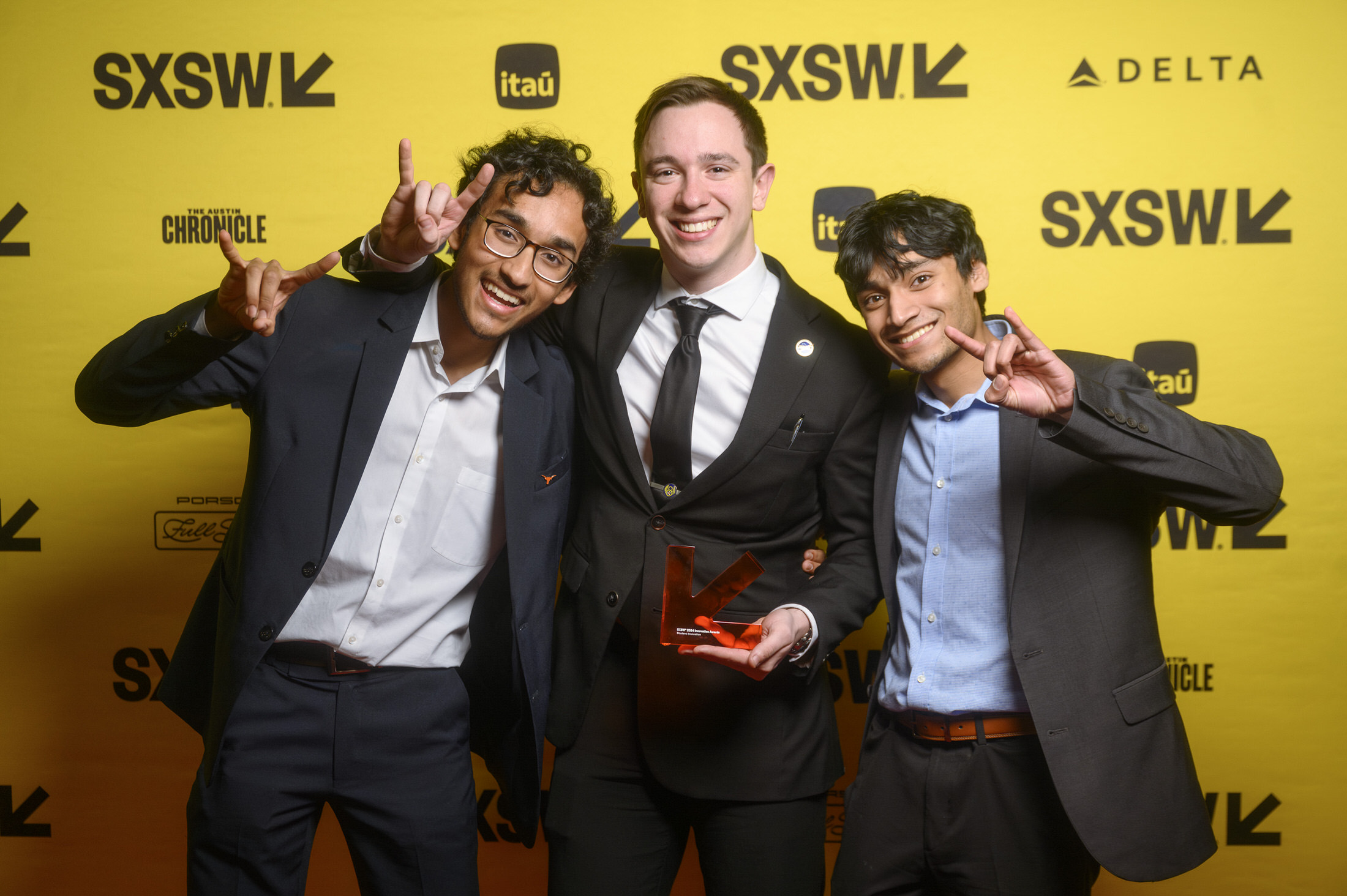
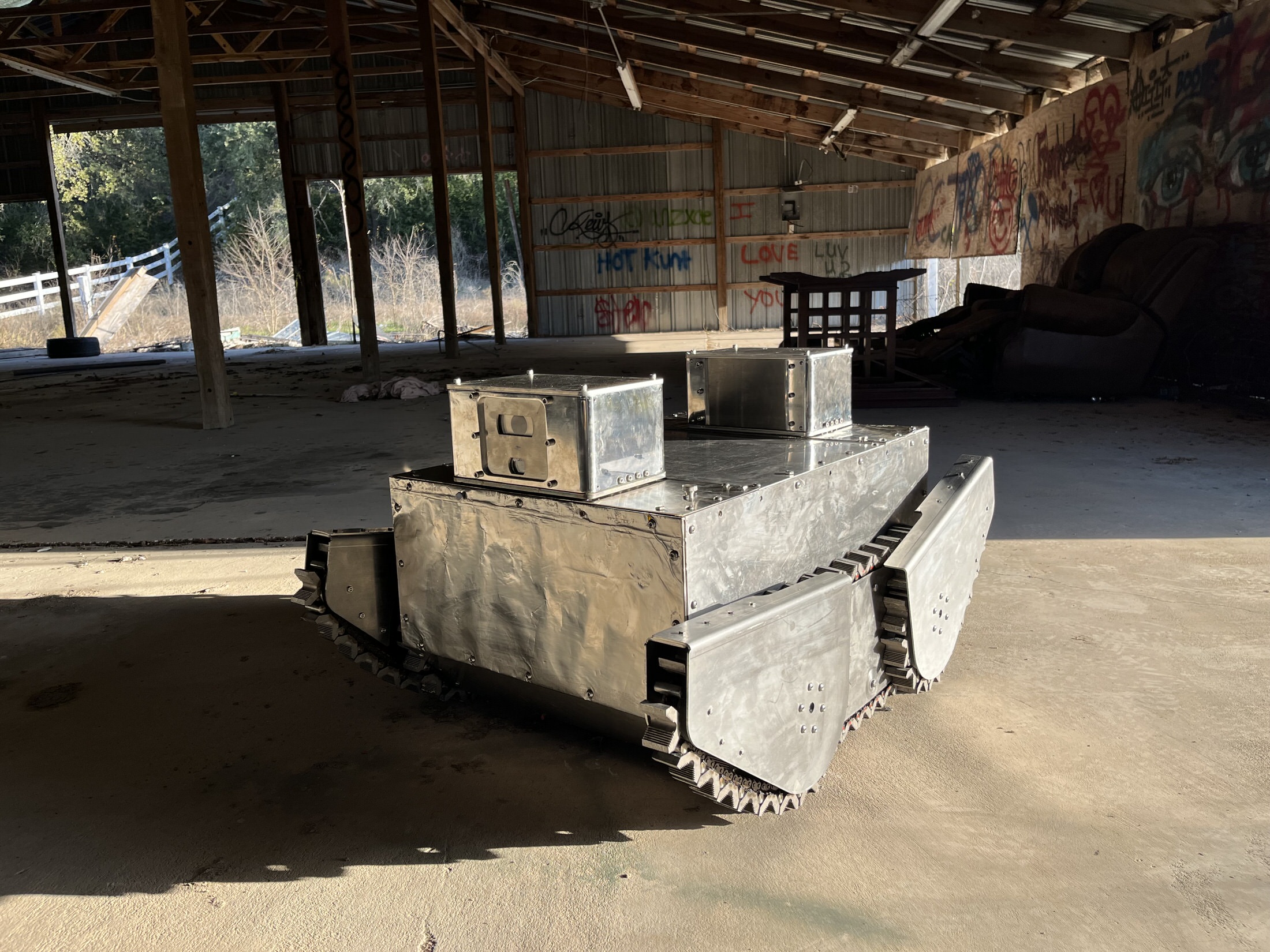
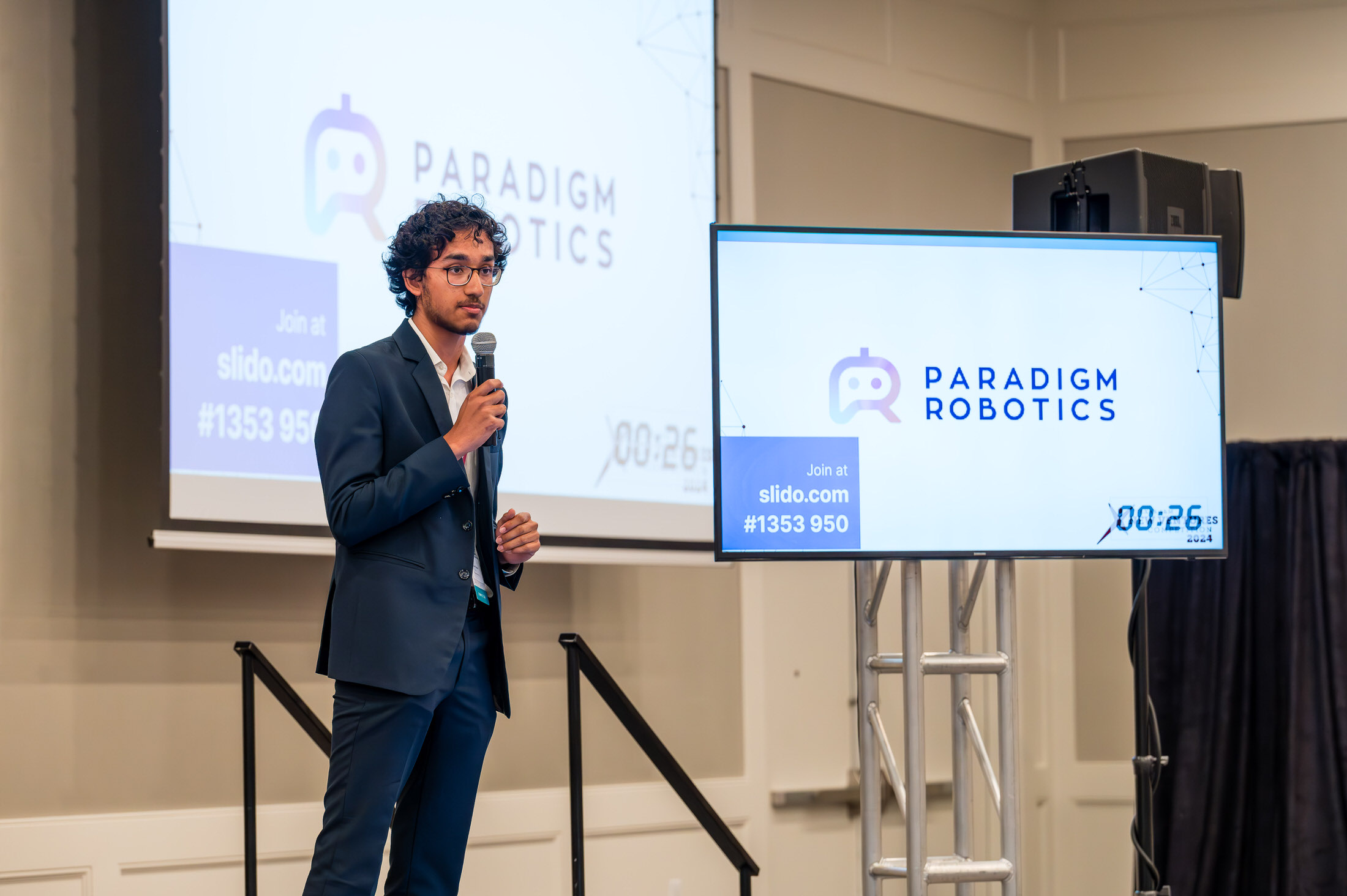
The company’s flagship FireBot has been tweaked and tested with 84 fire and police departments across the country, including local fire departments in Austin, Round Rock, Pflugerville and more, as well as industrial and defense organizations. It has been deployed in real-life fires, and the company is advancing beyond prototypes to mass-produce FireBot, aiming to improve response to fires and other hazardous situations.
Many would point to the fire in 2013 as Thakur’s origin story. But no one moment defines a person’s journey, and that is certainly true for Thakur.
He reached this point by developing key relationships and making choices that guided his passion to help and protect first responders into the creation of a company that produces a tangible product to assist in all types of hazardous situations.
“In a lot of ways, without UT Austin, this company could not have existed. We’re incredibly grateful for all the people who supported us along the way, whether it’s from interacting with all sorts of startup incubators, accelerators, funding sources on campus who supported my early entrepreneurial journey to working with labs, faculty, professors and fellow students who gave us insights, knowledge, support and time to help us build this thing.”
— Siddharth Thakur
A lifelong entrepreneur
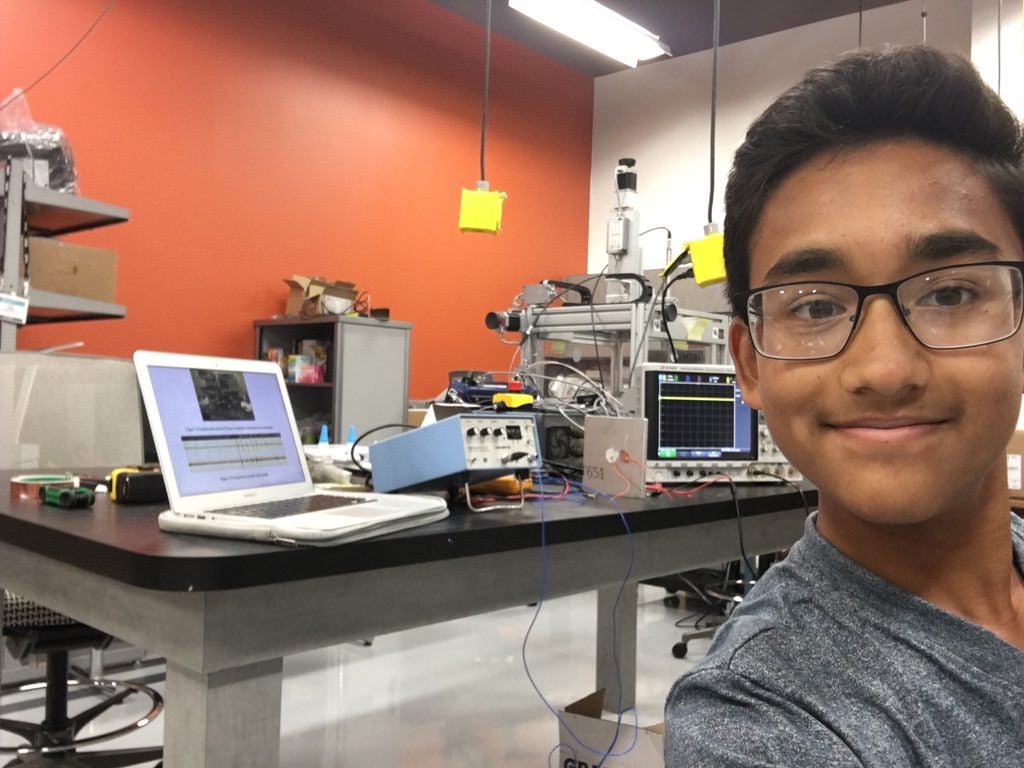
Even before coming to UT, Thakur was always in the lab working.
From his earliest days, Thakur’s creativity shone through. Many kids—this writer included—yearned for the big, expensive LEGO sets. Thakur was different; he was happy with the loose bag of bricks.
“I began crafting cars from the few bricks and pulleys I had, learning about gears and torque,” Thakur told me in 2021. “Over time, I progressed from simple drivetrains to complex LEGO machines, building remote-controlled forklifts and robotic gumball machines. Despite its simplicity, I have returned again and again to prototype and even integrate LEGOs into my projects. Developing mechanical LEGO constructions solidified my passion for hands-on building and sparked my desire to invent and develop solutions for problems in my local and global community.”
Of course, this is not an endorsement of LEGO specifically (though feel free to send some sets my way if you’d like), but it illustrates the importance of unstructured work and play from a young age. It builds curiosity and problem-solving skills.
And Thakur didn’t mind if his plan fell apart, another rare trait in a young kid.
“Siddharth would spend hours building something very elaborate and then it could not work. But he wouldn’t get upset, he was perfectly fine to break it all up and start again. That ability to absorb failure in a positive way is very important and foundational, and Siddharth has that.”
— Leena Palav, Thakur’s mother
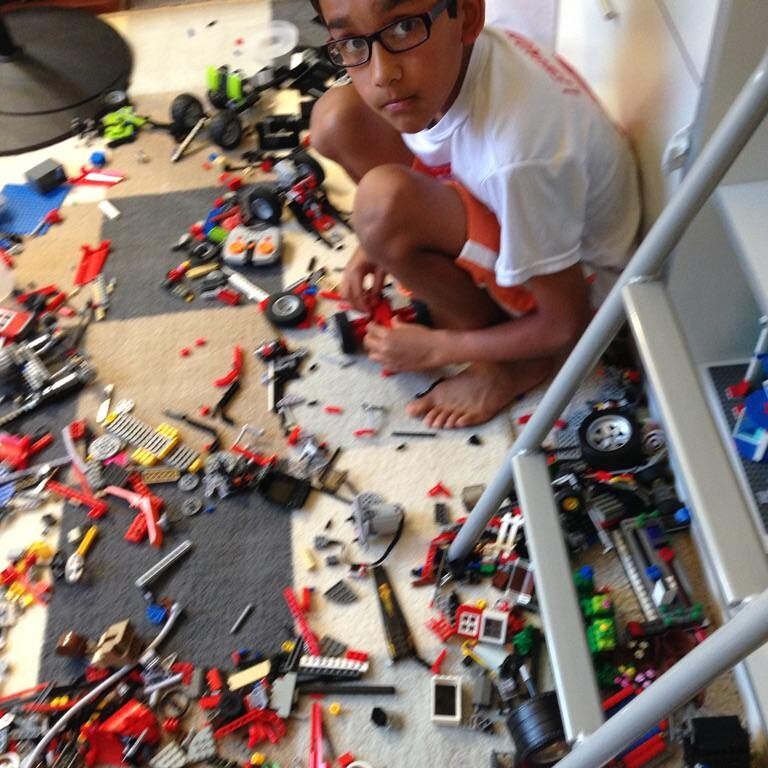
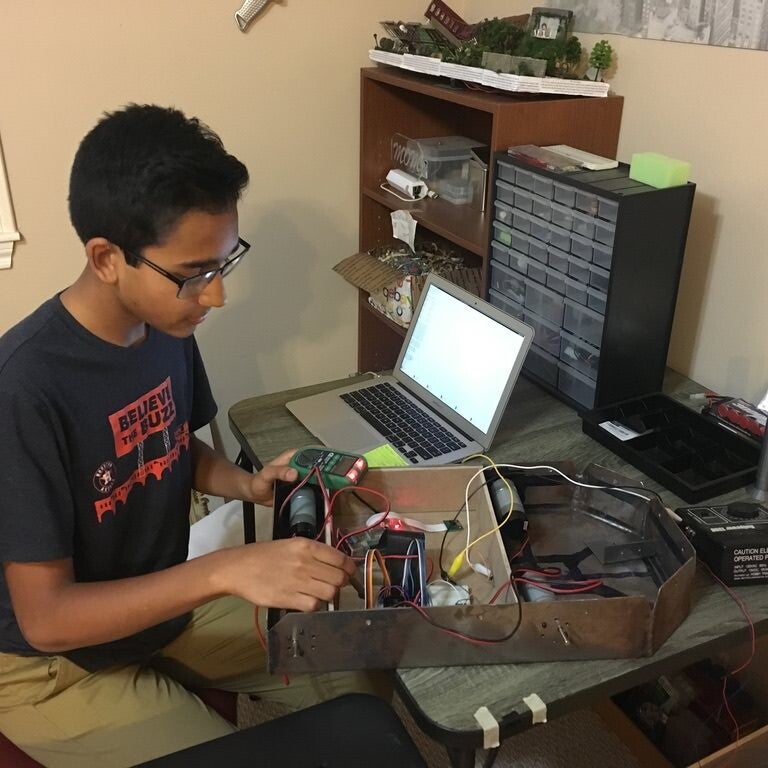
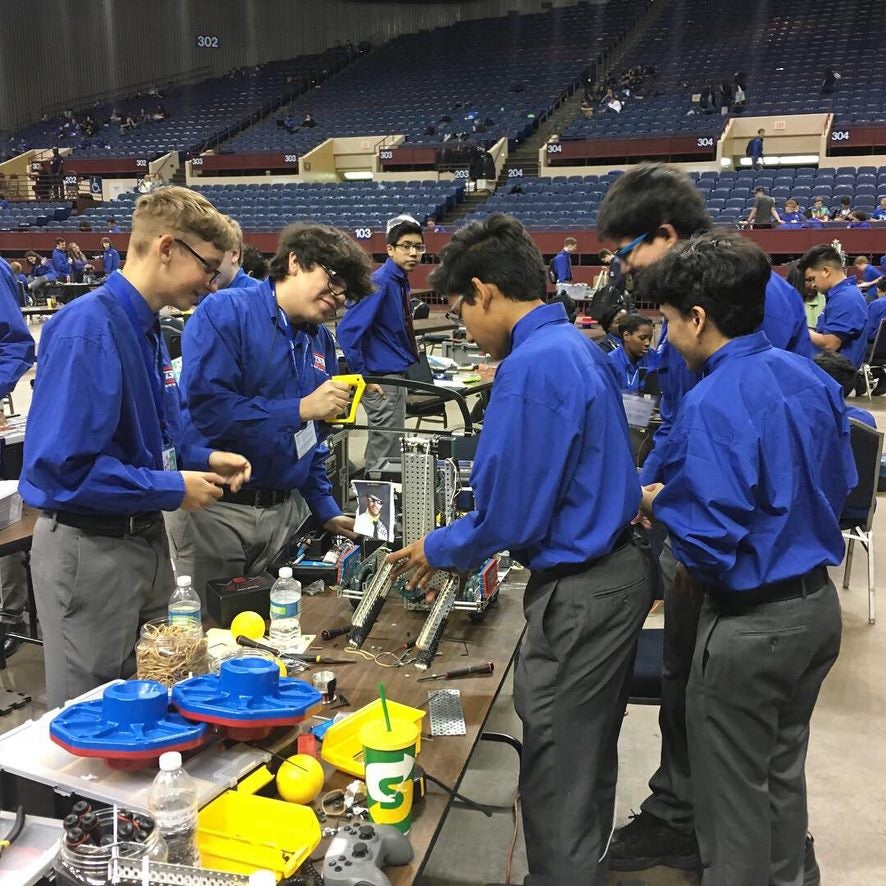
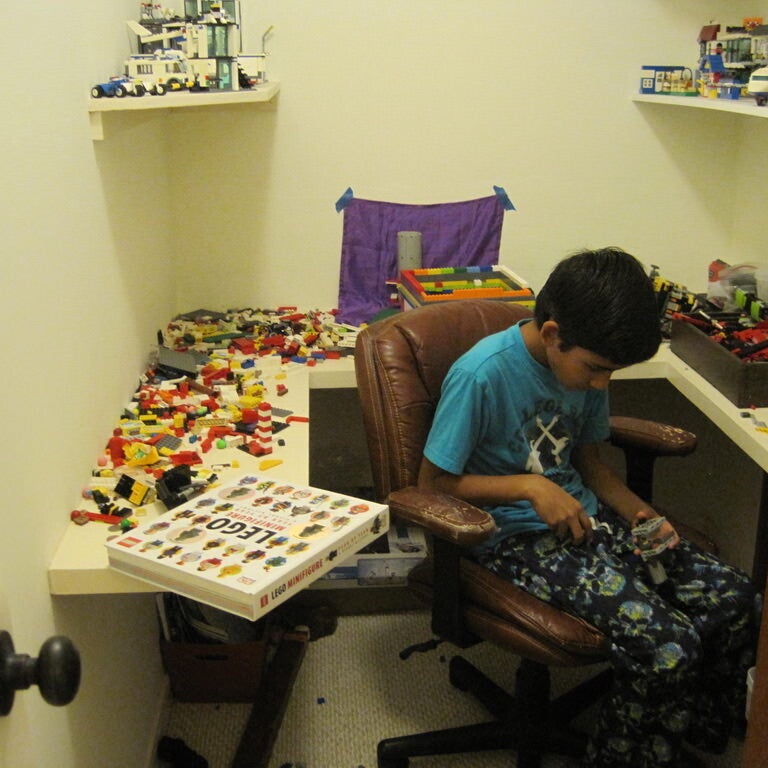
From LEGO to the lab, Thakur’s creativity was evident as a kid. Photos courtesy Siddharth Thakur.
Palav noticed these tendencies—his creativity and willingness to fail—as qualities of a leader, a CEO. And she would know.
Palav was an executive at GE when her two boys were young and later evolved her career to work with and coach startups. If you’re trying to build a company, she’s a great person to have in your corner.
In addition to his curiosity, dedication to service and adaptability, Thakur is a people person. He’s easy to talk to, and he remembers details from past conversations that could have happened last week, or years ago.
He’s also a theater kid. That experience has proved critical as he has taken his creation to pitch competitions and customer demonstrations worldwide.
“He has these two halves, one half when he gets really focused and he’s very quiet, just building and building, not wanting to be disturbed,” Palav said. “But then he has the extrovert side, which is important in a CEO role where you have to be comfortable with public speaking and talking to people and relating to them.”
A match made in Whitis
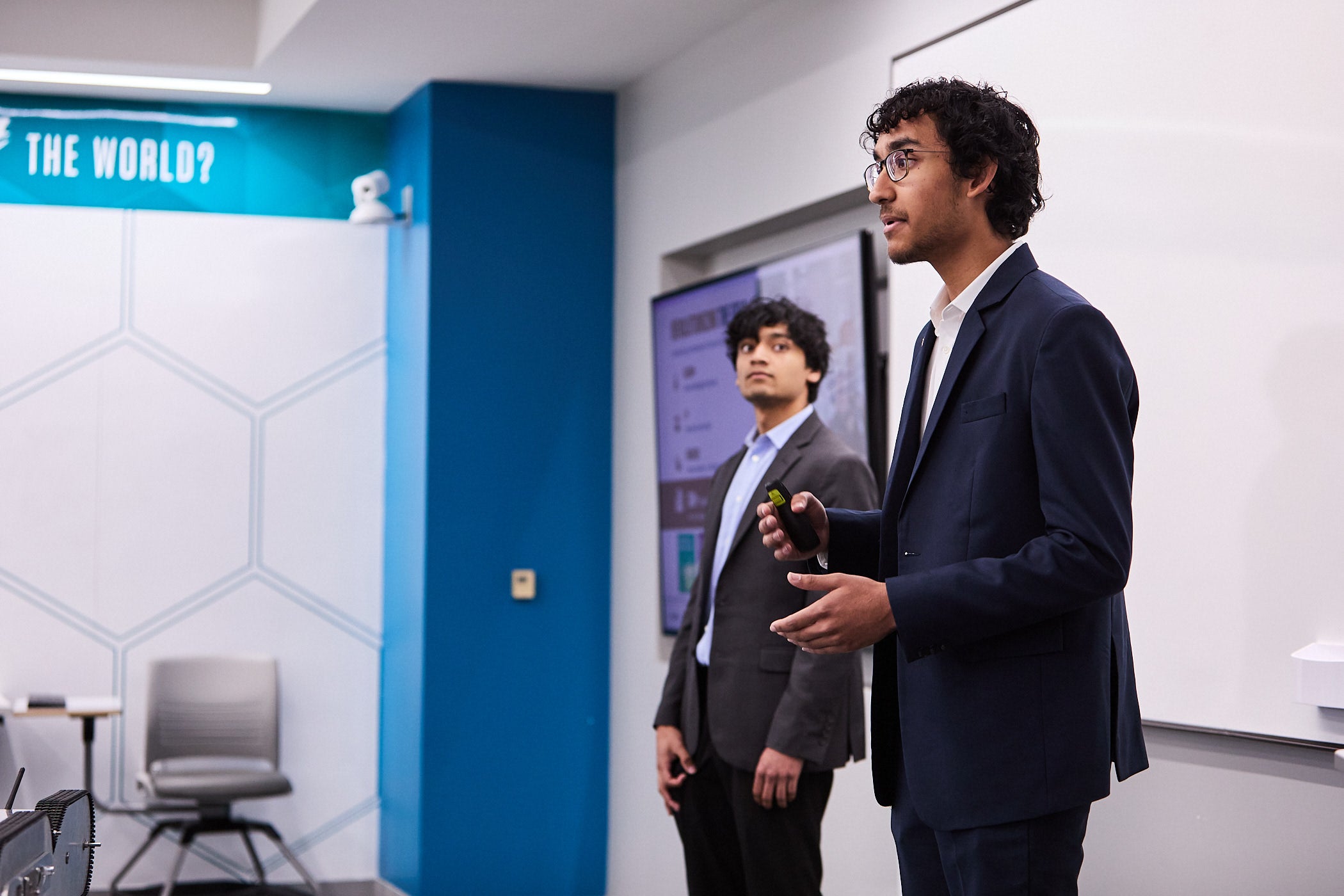
Paradigm Robotics co-founders Siddharth Thakur and Krishnan Ram.
Finding your people represents a key step in any journey. For Thakur, that moment came one late night in the common room at Whitis Court. He was preparing for a big demo and struggling to create a dashboard to display thermal imaging and videos captured by the FireBot.
Enter Krishnan Ram, a second-year mechanical engineering student who had just arrived on the Forty Acres after spending his first year at home in New Jersey due to COVID restrictions. They got to know each other over movie nights. Ram watched Thakur work on FireBot every spare moment he had.
“He has a level of persistence I didn’t know existed,” Ram said. “He thinks about (the company) every day. It’s what he’s thinking about when he wakes up, when he makes dinner and as he’s going to bed. It’s an obsession that is hard to describe, and I knew I wanted to be a part of it.”
Ram had already been involved in two startups. He was a software ace and a veteran of numerous high school hackathons, but he switched to mechanical engineering because he wanted to get his hands dirty building things. When he saw his new friend struggling, Ram put his hackathon hat back on.
“He sat down with me and said, ‘I can see you’re struggling. Let me just help you with this. He pushed me aside and spent the whole night just building with me. The next day, I invited him to join me for the demo, and it went great. Then I told him ‘we need to team up.’”
— Siddharth Thakur
Ram absorbed Thakur’s obsession with helping others, especially after speaking with the firefighters and people who had lost loved ones who were first responders. And he’s not the only one.
The Paradigm Robotics team. Photos courtesy Paradigm Robotics.

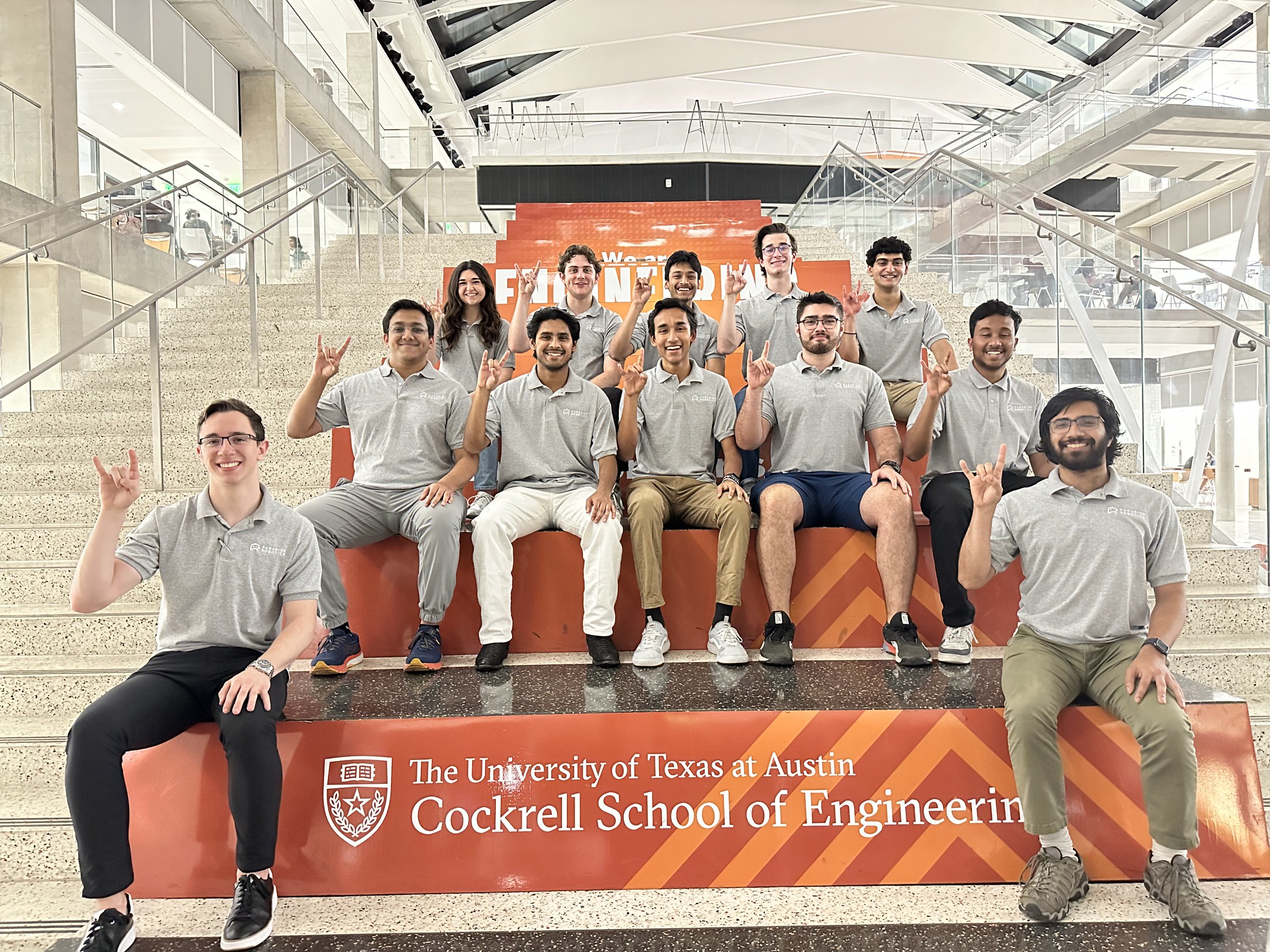

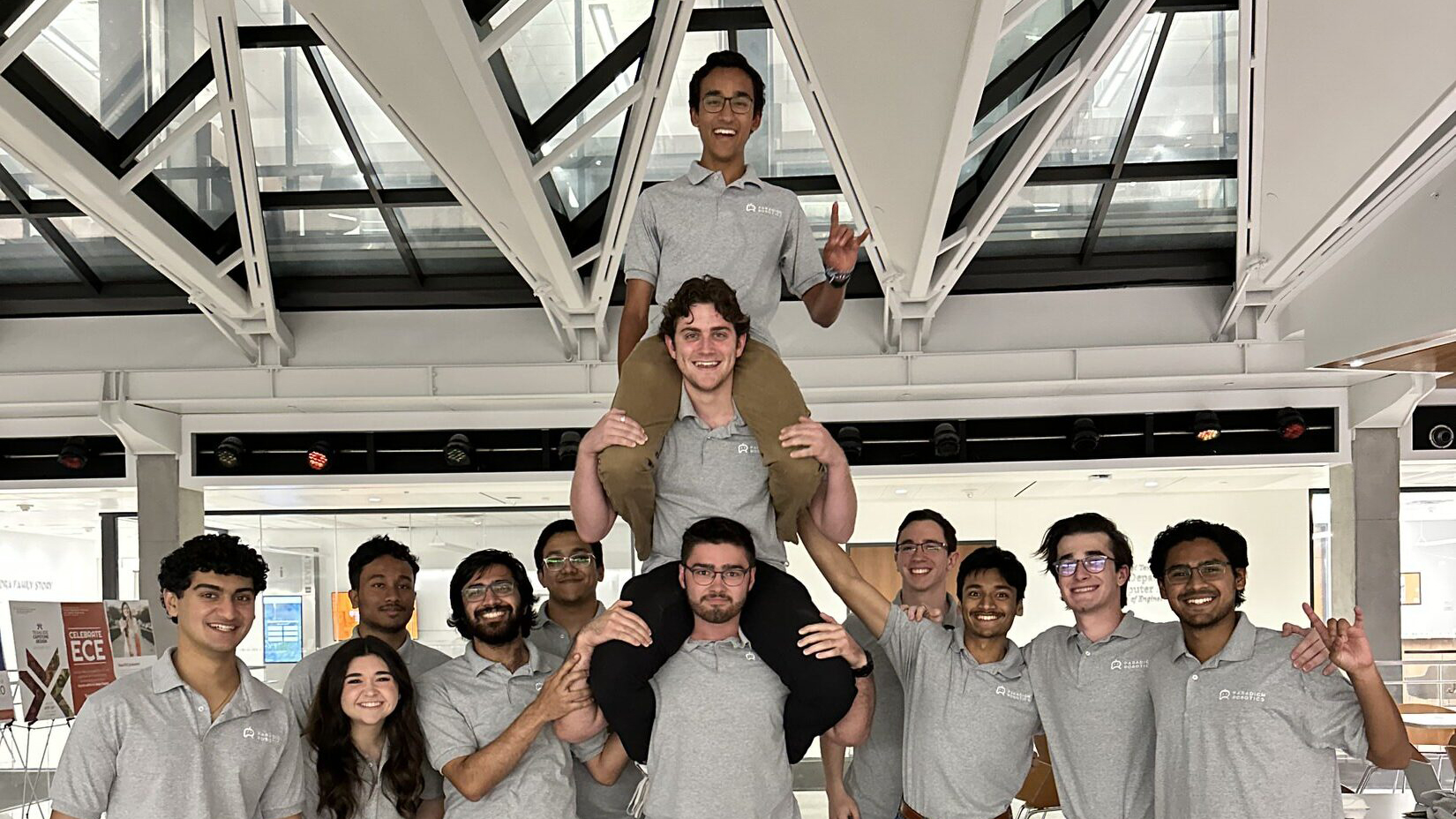
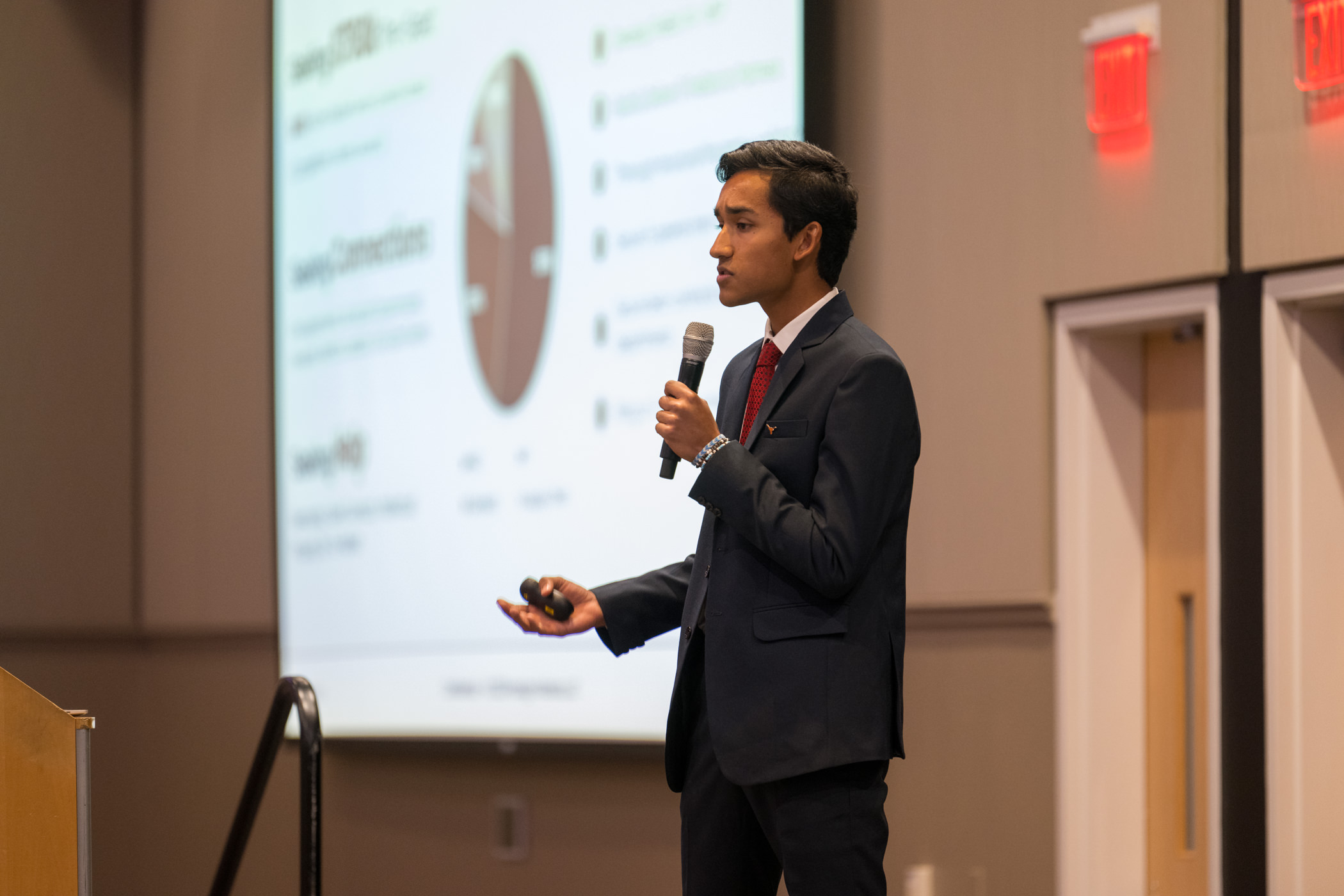
Today, Paradigm has about 20 part- and full-time engineers working on FireBot, mostly current or former Longhorns. And they’re growing.
Thakur is glad he launched his startup as an undergraduate. It allowed him to meet his cofounders and fellow engineers. And to learn from and feed off the energy of everything happening around him.
“It’s the best breeding ground for building startups,” Thakur said of college campuses in general. “When else are you going to be around more peers who are working hard, ambitious, incredibly talented and intellectual? You have access to facilities and labs where you can build things, tinker with them, develop prototypes, and, of course, some of the brightest minds in the world in our faculty and facilities and labs where you can test your creations.”
Evolution of a FireBot
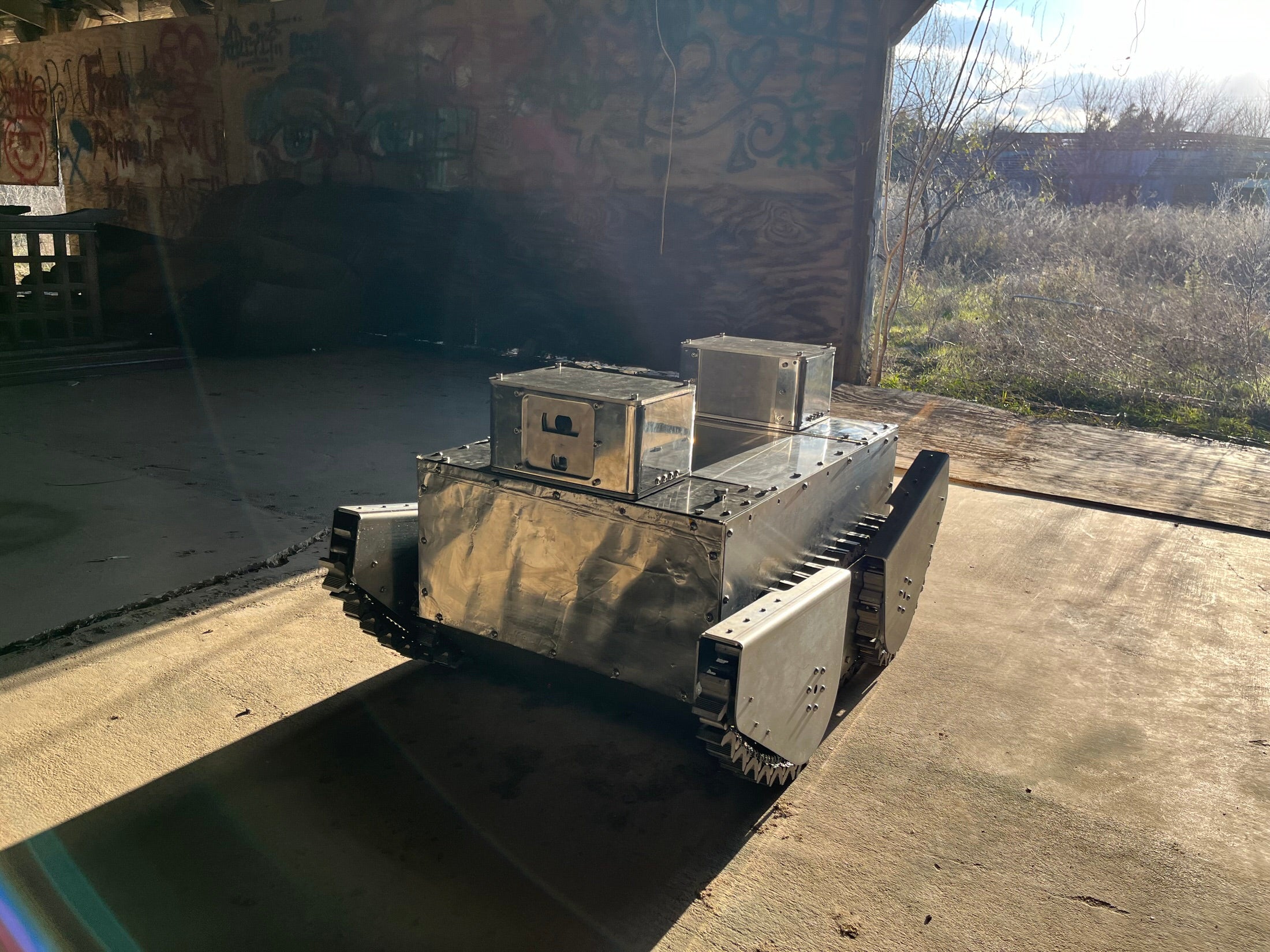
The latest version of FireBot. Photo courtesy Paradigm Robotics.
The FireBot of today looks very different from the version Thakur developed before he came to UT. This is the fourth iteration, and it will soon be produced for customers.
This version looks like a boxy tank. Its tread is, to borrow Thakur’s favorite word, rugged. The previous version was a little smaller, with two sets of more basic treads attached to a metal box with antennas on it.
The Paradigm leaders didn’t go into great detail about the engineering changes—there’s certainly some secret sauce to protect from the competition. The core challenge, though, is clear: every piece of the robot had to be able to withstand extreme temperatures.
“The high temperature was an incredible challenge to make real and not just a very good prototype,” Thakur said. “We had to engineer every thermal-mechanical piece, every spool, every spindle, every axle, every joint, to the shiny stuff on top, which is multilayer insulation that reflects 95% of radiative-based heat, to internal cooling systems for that heat, and it allowed us to hit all the other critical requirements necessary to make a really rugged robot.”
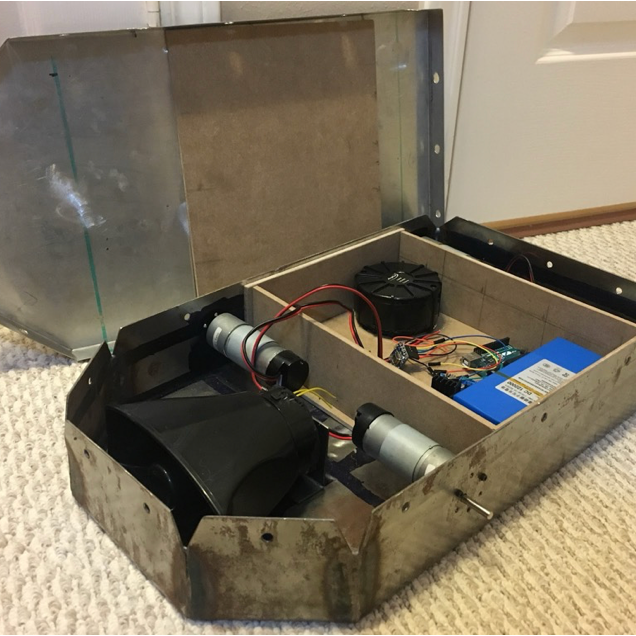
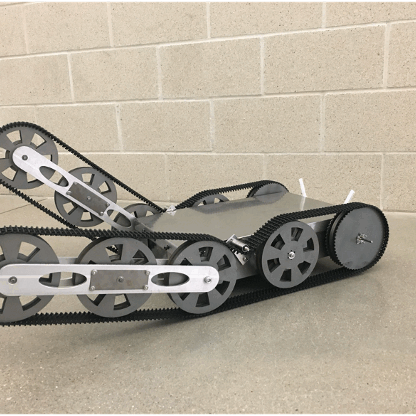
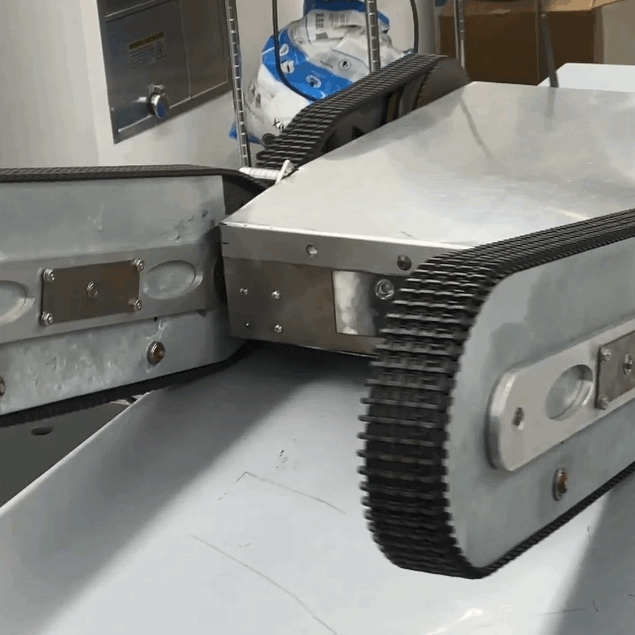
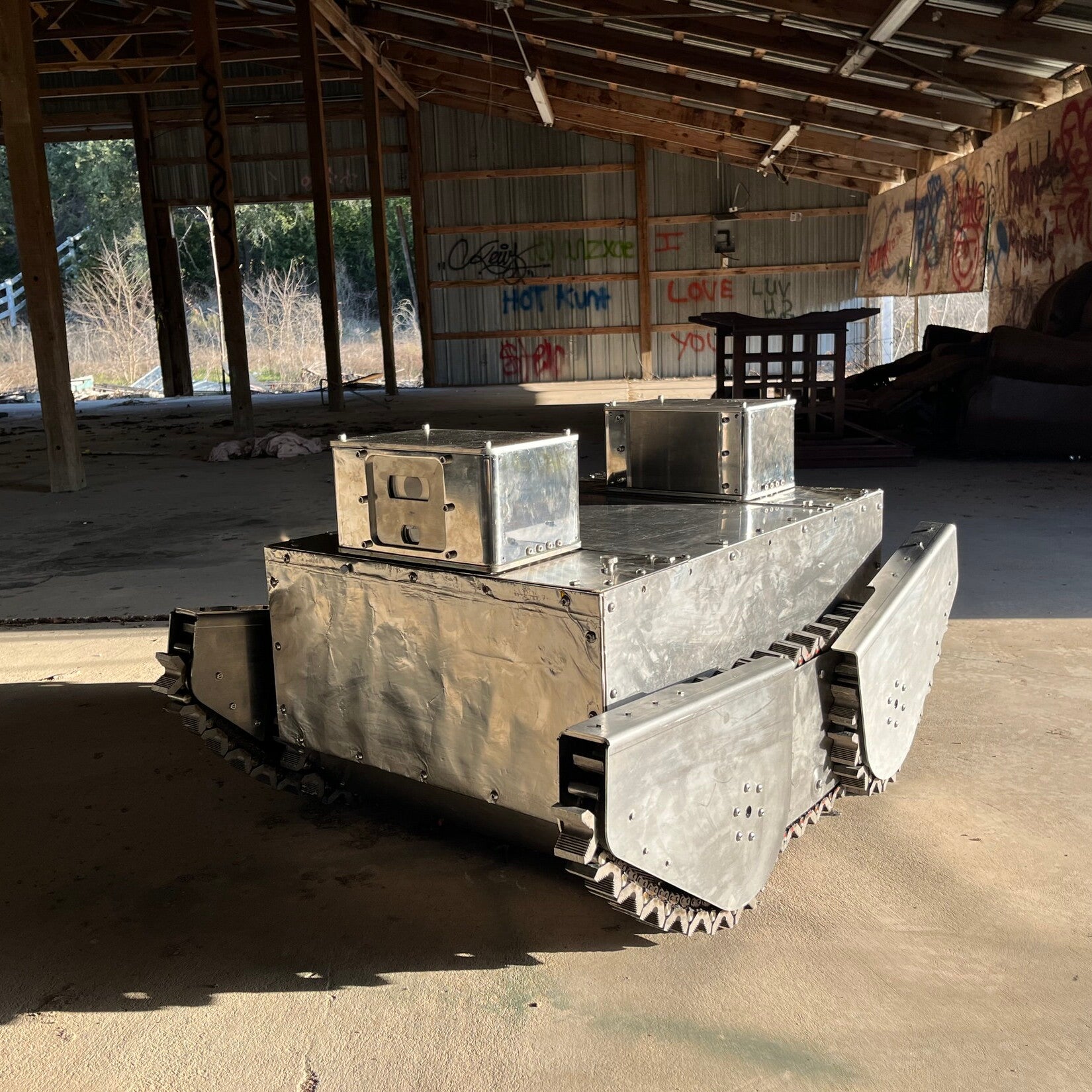
Different versions of FireBot over the years. Photos courtesy Paradigm Robotics.
This wasn’t the only big challenge along the way. The team had to understand the angles to enable the robot to climb stairs, select the right materials for the tread and cut pieces correctly so it could maneuver in a variety of tight spaces.
To achieve this, the engineers had to learn about advanced materials, thermal properties, machining and many other skills. These are all hard problems, and it speaks to the drive and the can-do spirit of the team, with Thakur setting that culture.
“Sid came in with his robot trying to solve a really hard problem,” Ram said. “But we have a mission to keep people safe and value to the community, so we’re just going to do it and learn. He’s embodied that quality that has spread to all of us, that we’re just going to figure it out.”
Doubling down
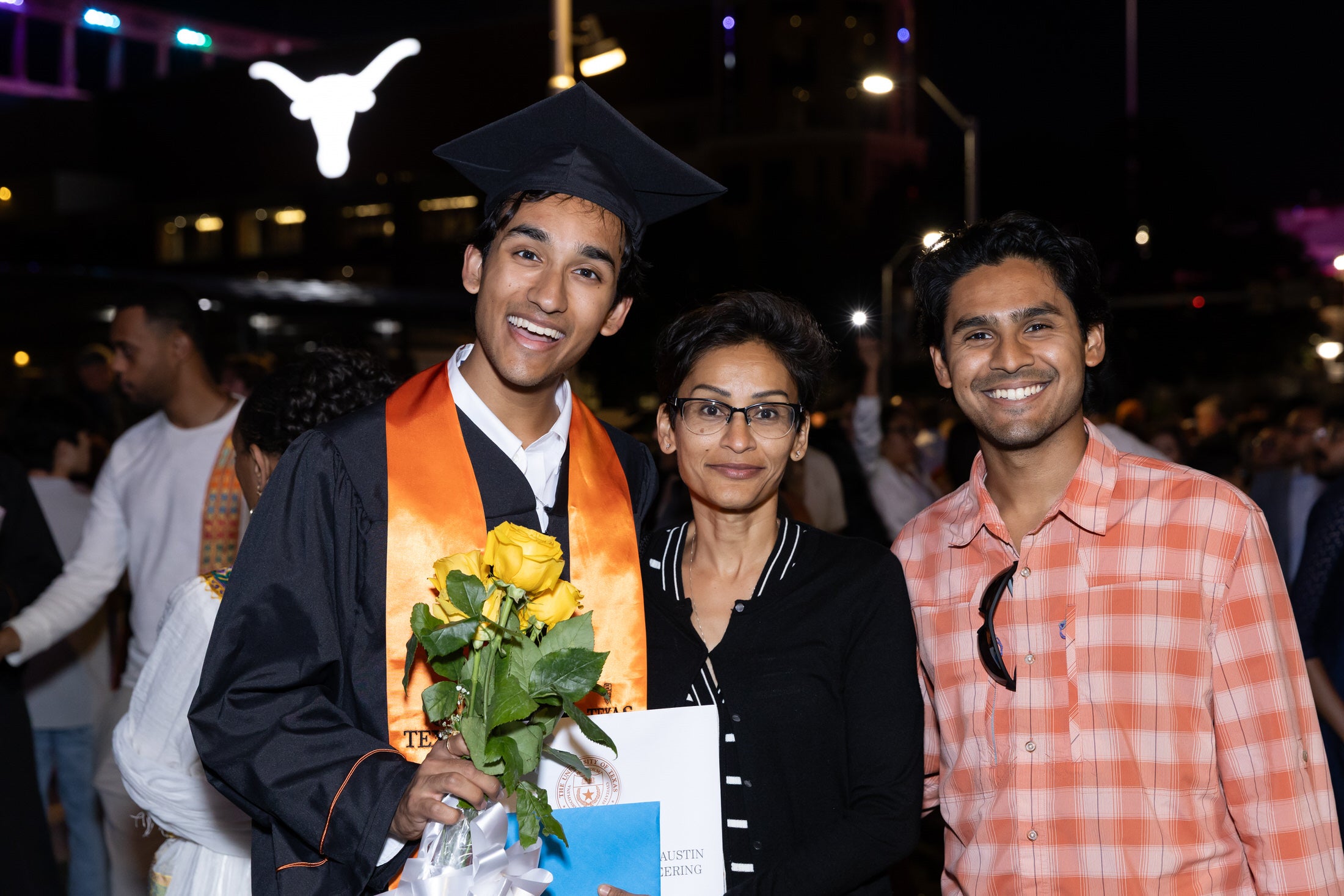
Siddharth Thakur with his mother, Leena Palav, and his brother Aniruddh on graduation night 2025.
Ask Palav, and she’ll tell you her son’s path has been defined by a series of key moments. He benefited from studying at Houston Community College and the Texas Academy of Mathematics and Sciences. Here, Palav said, he learned how to turn an idea into a real prototype and finish a project.
And of course, the decision to come to UT was a major turning point.
“It’s just amazing the opportunities he’s gotten at UT: the people, the resources, the energy,” Palav said. “It’s really interesting to me to see how one student among so many has been able to form such deep connections at such a big university.”
But one more key moment happened just a little over two years ago. For all the attention the FireBot had already received, Thakur was working on another startup. This one flew under the radar despite its huge mission.
Gazelle Ecosolutions began as an app to help ranchers in Africa manage their land. That evolved into building carbon projects across Southern Africa, software to manage those projects and remote sensing applications.
With concerns about splitting his time, Thakur had to choose between the firefighting robot and carbon reduction projects in Africa, both extremely worthy causes.
Ultimately, he exited from Gazelle and went all in on FireBot. But the rest was not, in fact, history.
Paradigm and its FireBot still needed funding to kickstart production of the robot, and that was no guarantee. Palav asked Thakur to find a job as a fallback. And he did. But the goal remained the same.
“He always had his confidence, but I had to be a realist,” Palav said. “I offered a backup plan for him to push out the date of his graduation. He said, ‘No, I’m going to graduate in May, and I’m going to get money for FireBot, $1 million-plus.’ It sounded outlandish at the time, but here we are.”
Once again, Thakur’s persistence paid off. Just a few months later, Paradigm Robotics closed its funding round. The call for the last round of funding came on May 9, graduation day, while he sat waiting to hear his name called.
The friends we made along the way
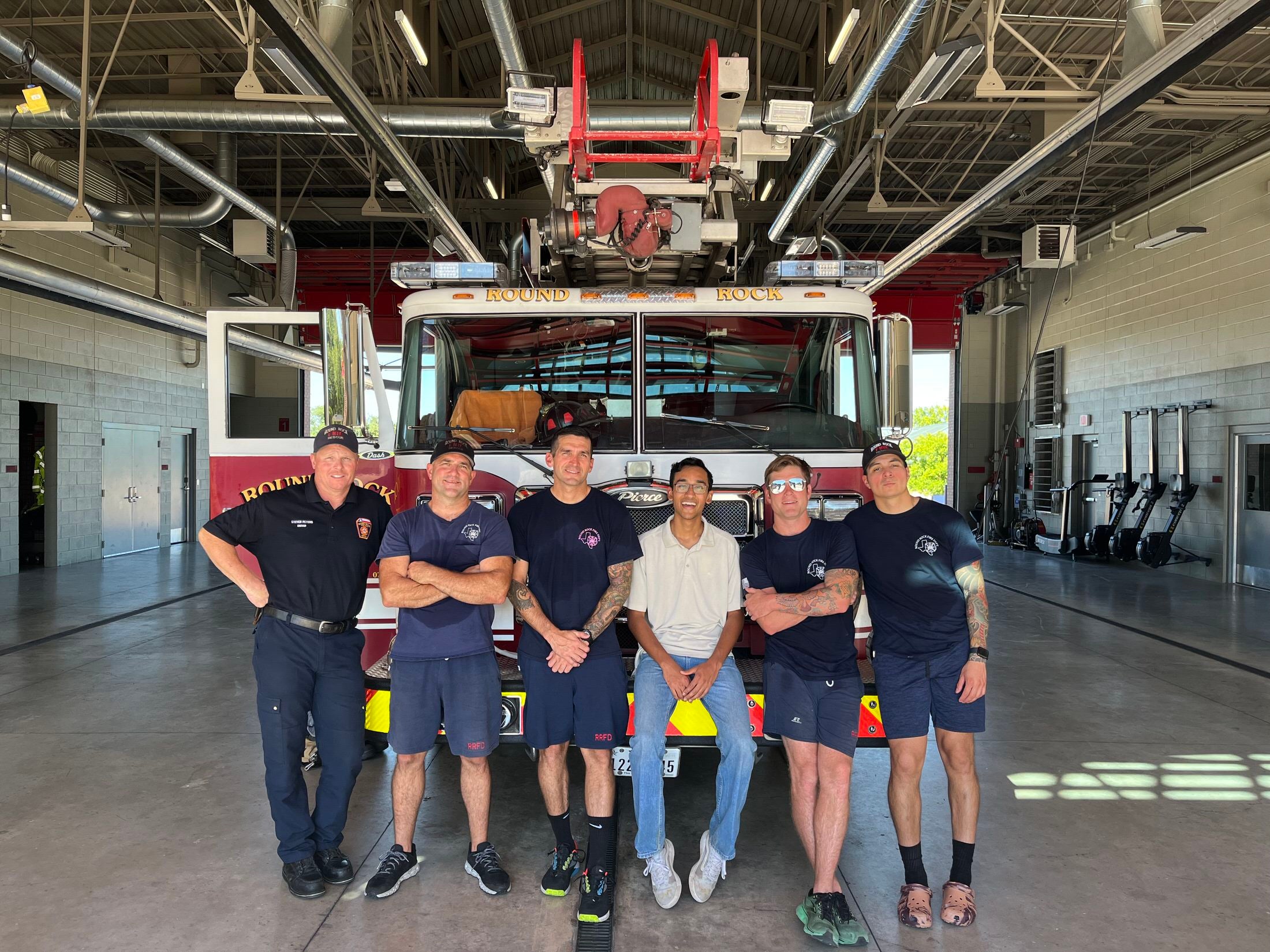
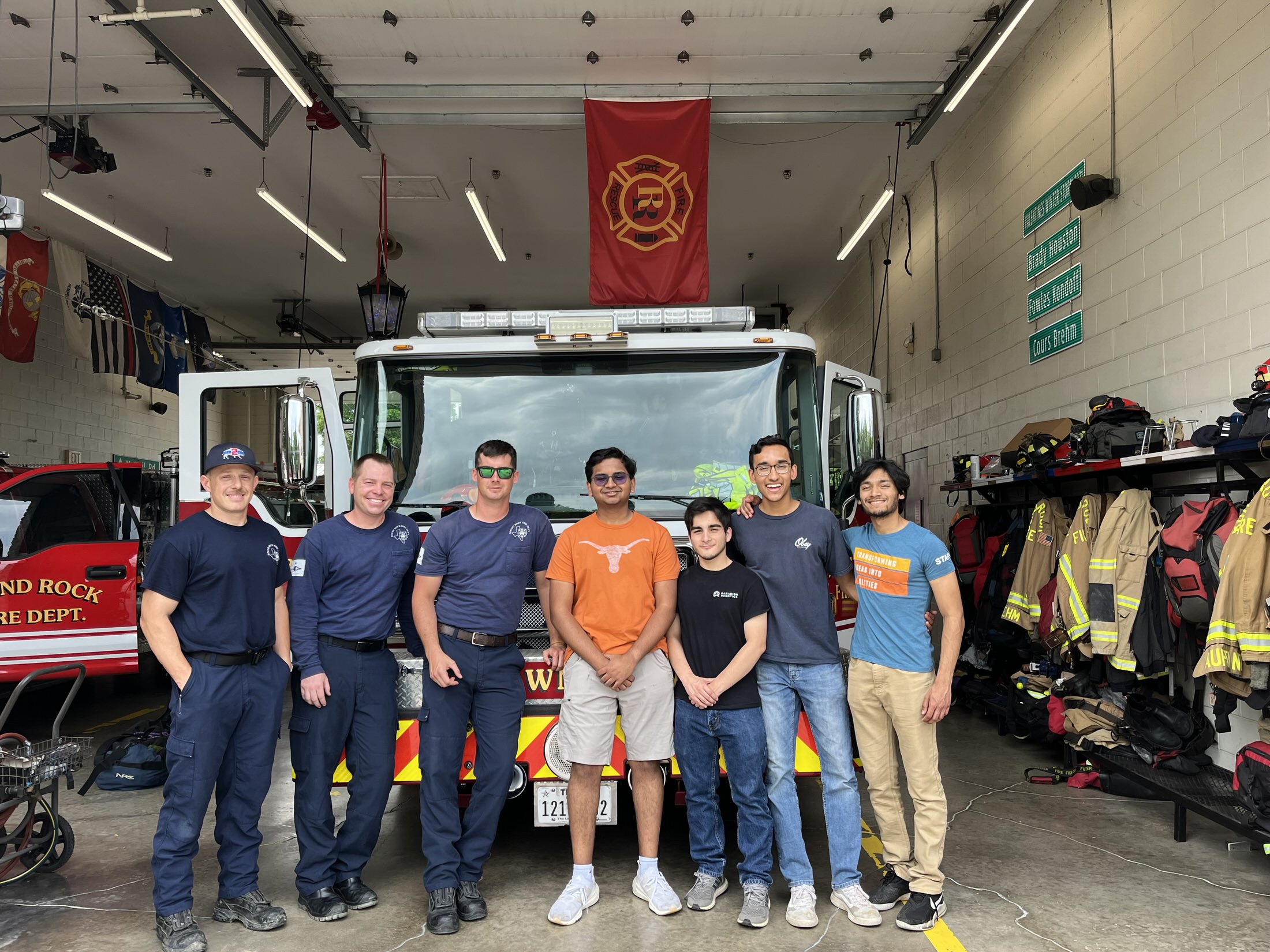
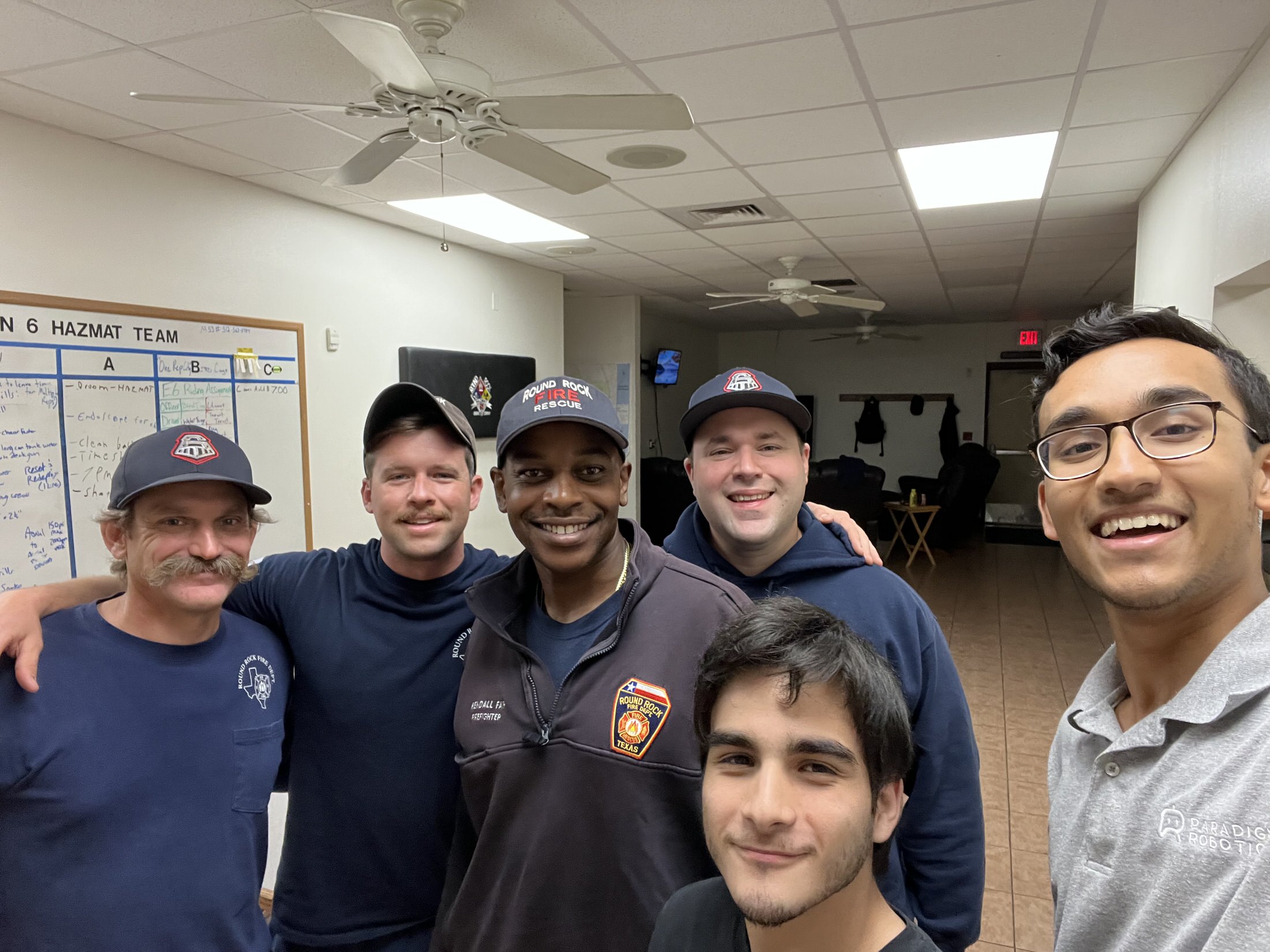
Siddharth Thakur with members of the Round Rock Fire Department. Photo courtesy Siddharth Thakur.
Relationships are at the core of Thakur’s mission. Even before he started the project, when he begged his mom to drive him around to talk to firefighters for his sensor idea, Thakur understood the importance of working closely with the people he was trying to help.
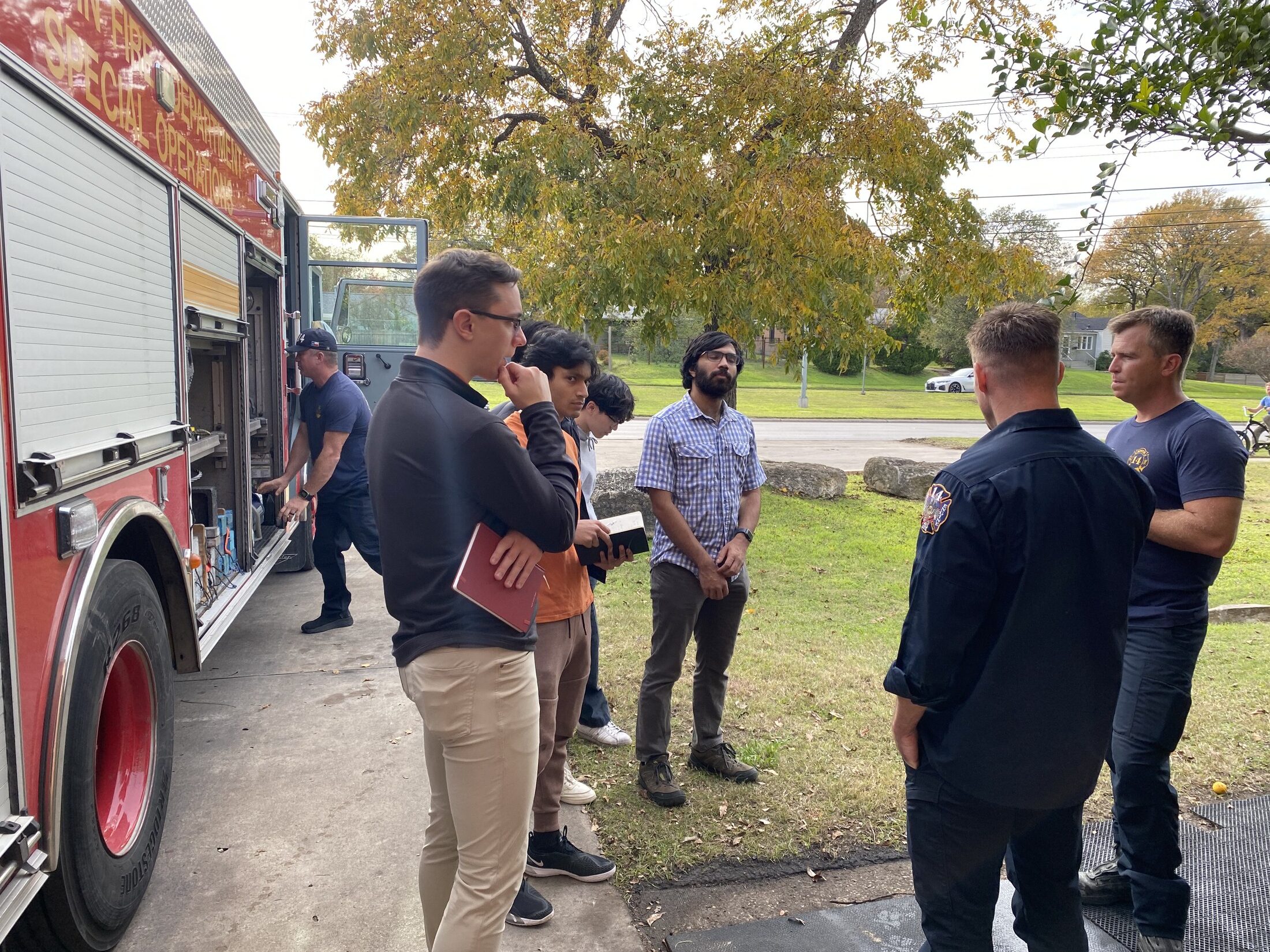
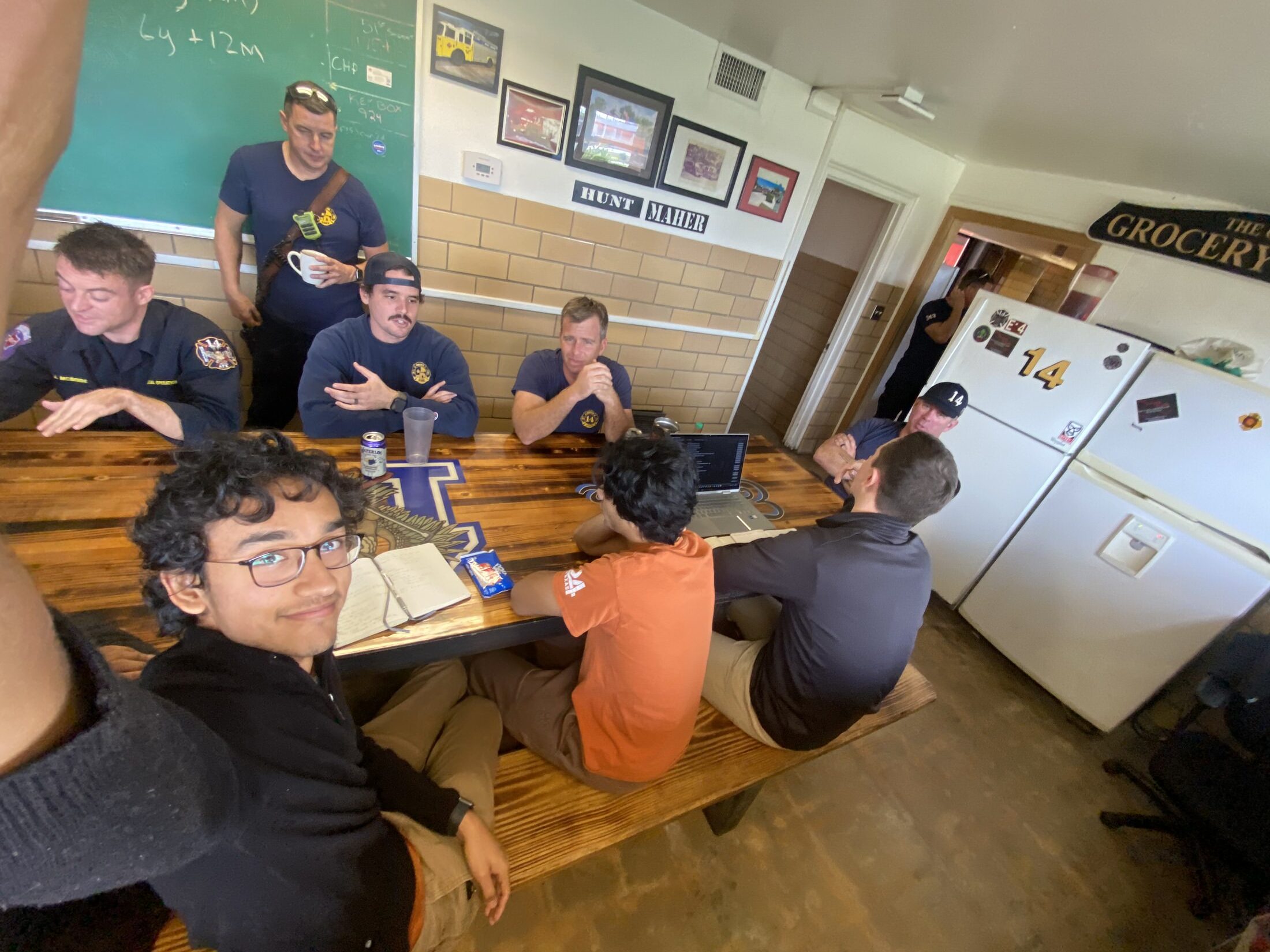
However, as Thakur and his team got deeper into UT, the Cockrell School and the technical challenges of the robot, they lost some of that perspective. So, they decided to go back to where they started and pound the pavement. They went from fire station to station across Austin, ice cream bars in hand, to chat with firefighters.
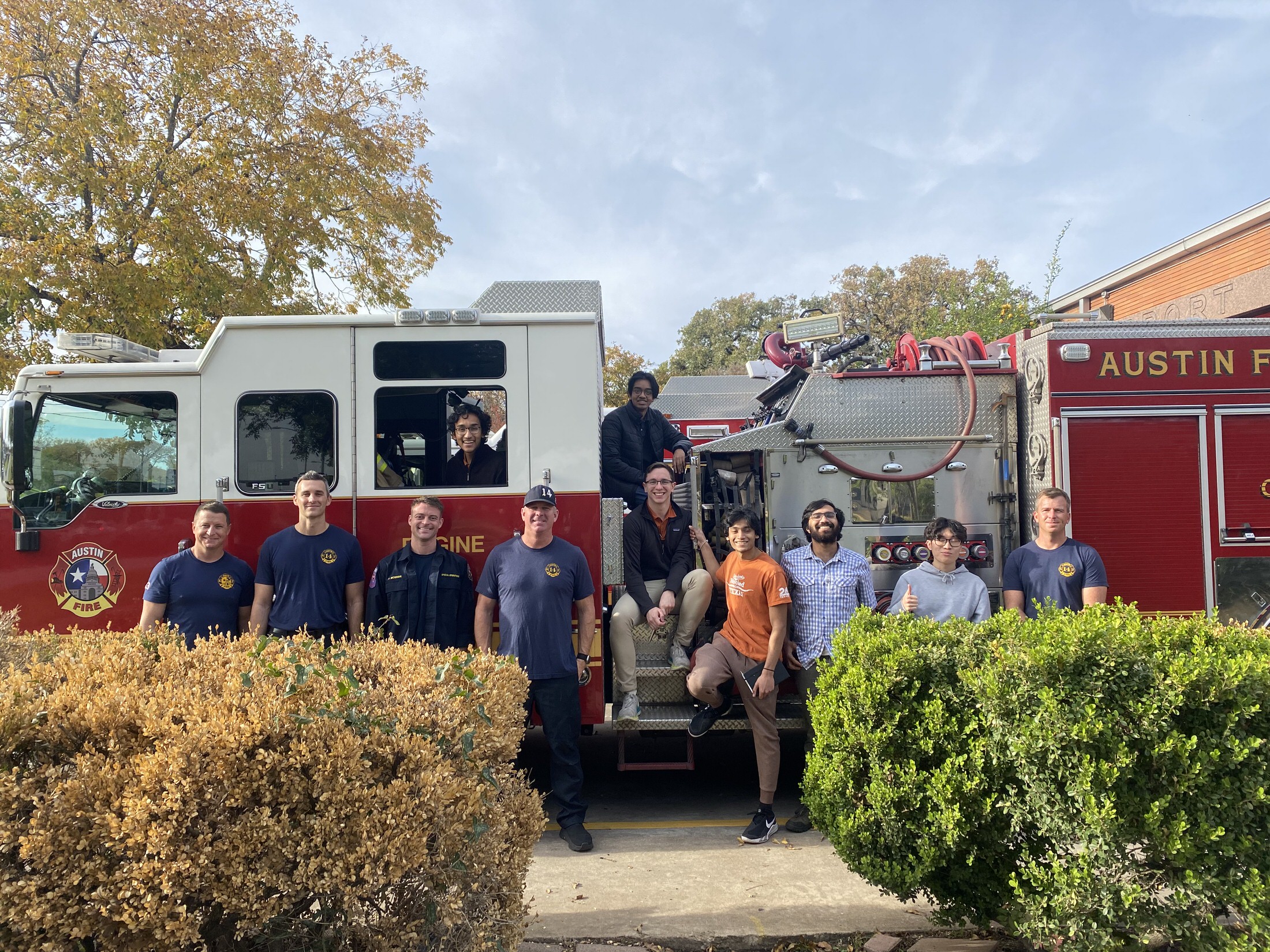
At station 14, they met Matt Holmes, the battalion chief of special operations for the Austin Fire Department.
“He came in well spoken, clearly well prepared with a clear thought process he’d been honing all the way back to high school. UT being the institution with the reputation it has, the technical innovation that comes out of campus, we thought it would be interesting to develop a partnership.”
— Matt Holmes
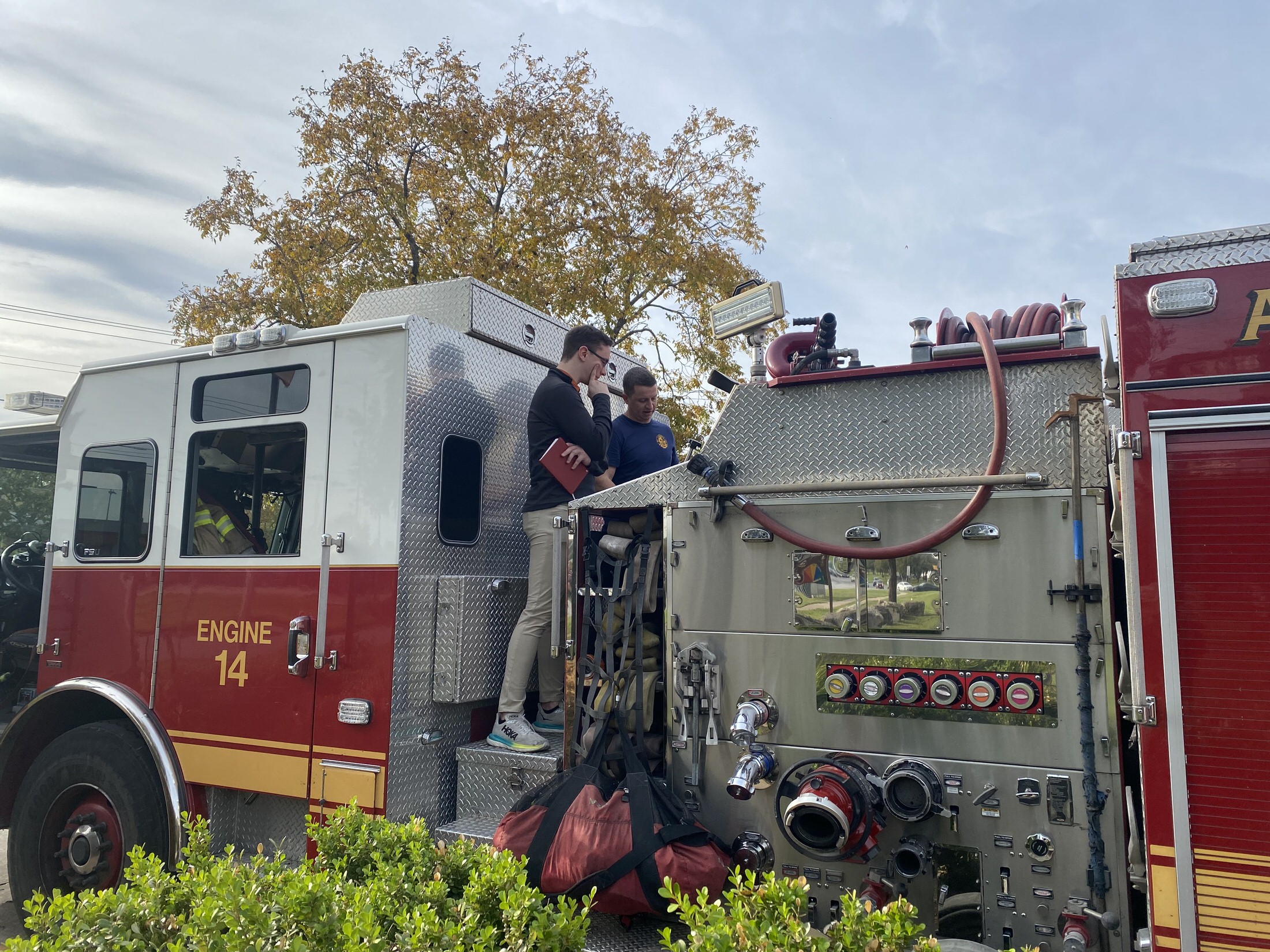
Austin Fire Department has been a valuable partner for FireBot over the years, as have other local departments around the area. These partnerships have allowed Thakur and his team to test the robot in live-fire environments and see what’s working and what’s not.
The Paradigm Robotics worked closely with fire departments in the Austin area and around the country to build and refine FireBot. Photos courtesy Paradigm Robotics.

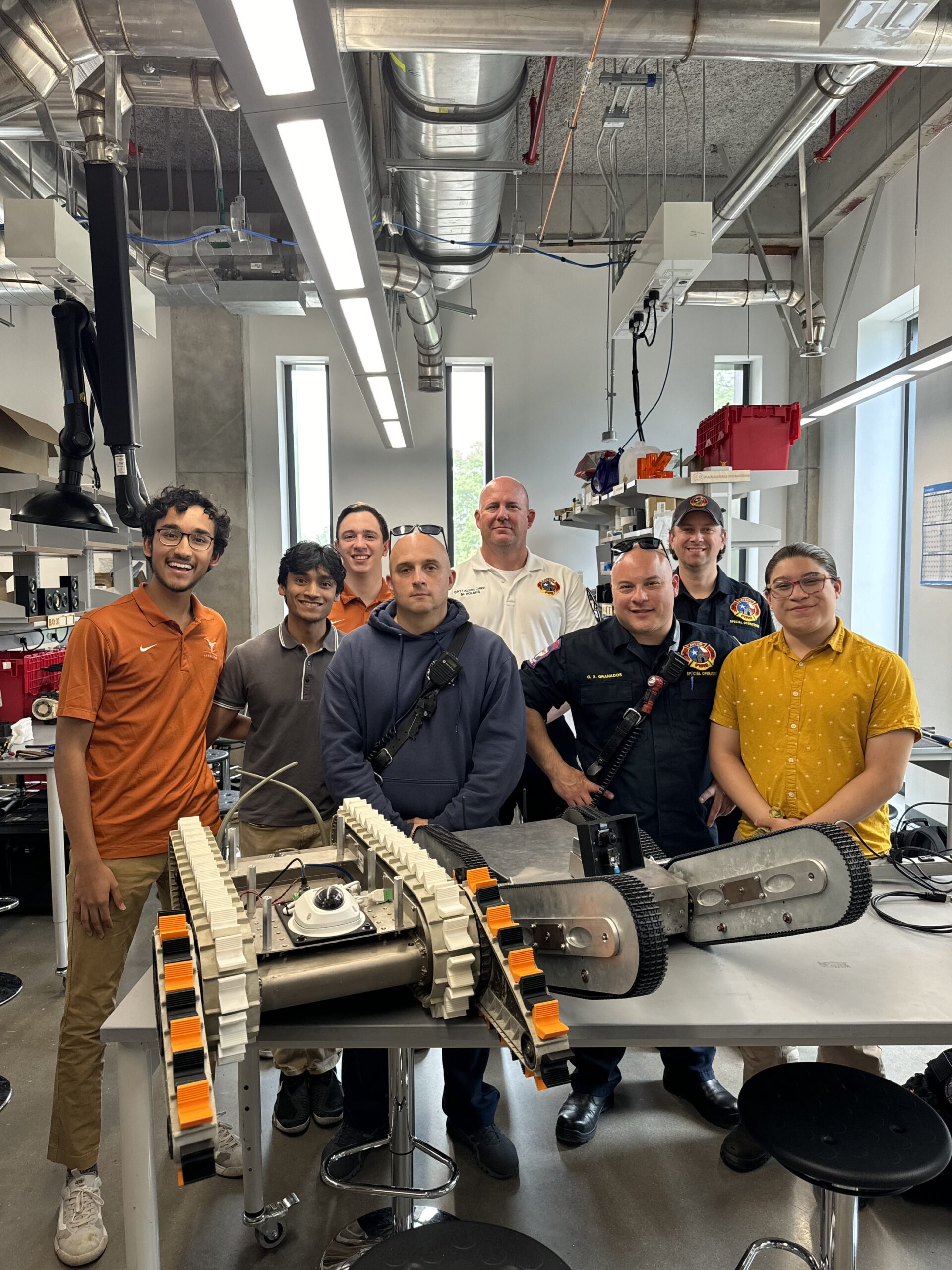
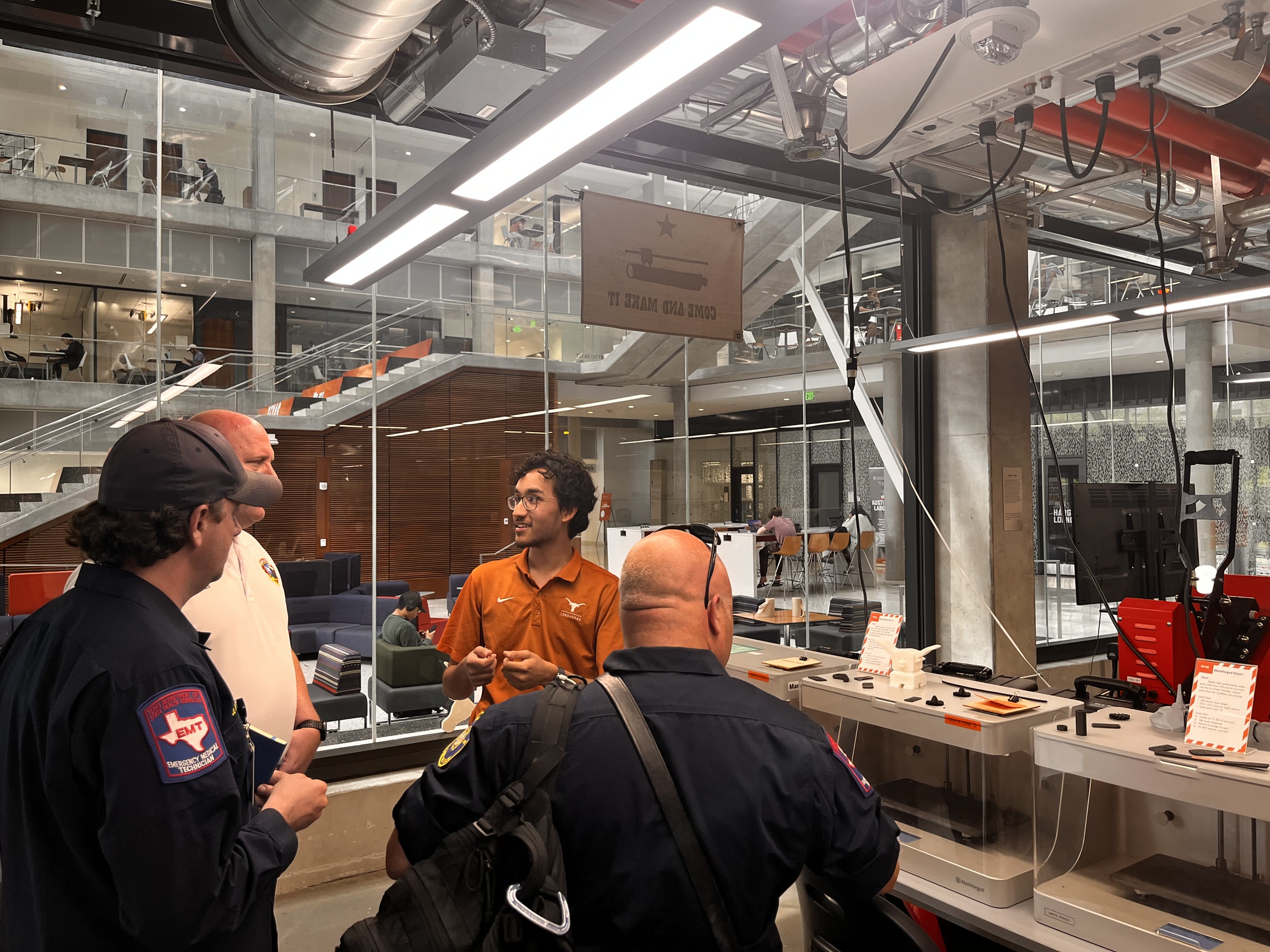
Thakur has also leveraged UT’s infrastructure to advance his invention. Until they moved out last July, the Paradigm team operated out of Texas Inventionworks, UT’s innovation hub housed within the Cockrell School.
Through UT, Thakur also met some of his most valuable advisors. Jayesh Parekh is one of those people, and he’s also a multi-time investor in the company. The UT alum and veteran venture capitalist met Thakur and his team through the Texas Innovation Center, the Cockrell School’s startup incubator.
Parekh’s resume speaks for itself. He’s been an investor out of Singapore for decades. He spent 12 years at IBM and co-founded Sony Entertainment Television, a major television network, with Sony Pictures Entertainment. Today, he leads Good Protein Fund, a venture firm that invests in alternative proteins, like plant-based and lab-created meats.
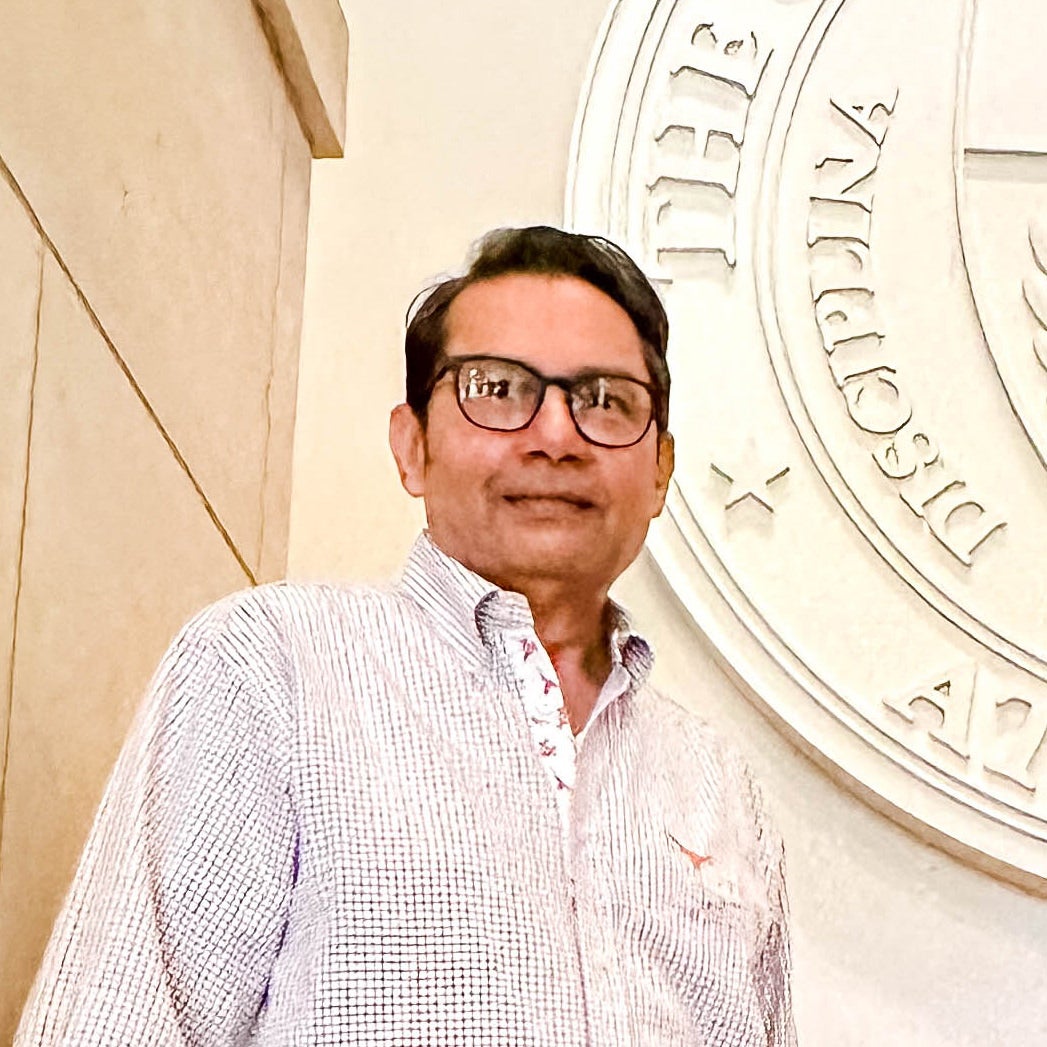
“When I met Sid, I was fascinated that a student who is just a senior in college possessed such a high level of tenacity and understanding of the breadth and the depth of what he was doing. In my years of investing and working with startup founders, rarely have I ever come across someone with such talent and skill and understanding at a 360-degree level.”
— Jayesh Parekh
Parekh has served as an essential guide for Thakur, helping the company with its go-to-market strategy and establishing hardworking but sustainable culture. His advice also included more philosophical lessons, such as knocking on every door (just as Thakur did with potential firefighting partners), continuing to nurture connections and giving before asking.
And then there was the practical life advice for the young entrepreneurs just starting to make their way in the world who bonded over all-nighters in the early days. It serves as a reminder that these young entrepreneurs are still learning how to be their best at work and setting themselves up for future health and success.
“Every time we meet with him, he asks us if we’re getting enough sleep,” Thakur said. “And we’re incredibly bullish on that and make sure to get eight to 10 hours every night. It helps us not burn out, not get tired and stay focused on our goal.”
Where it all started
Texas Innovation Center helped Paradigm Robotics get off the ground. Learn more about the Cockrell School’s startup hub.
 |
|